



Two years of ministerial mandate, which ended on July 23 of this year, reminded me of the interesting thought that “a person only finds out which path he has taken when he reaches his destination or when his path is interrupted”. Although I believe that we should certainly expect with an appropriate dose of caution that we are at the end of the road (or at the end of a stage), I believe that it is elementary fairness towards my associates and other zealous advocates who protect the environment of Montenegro, and who have selflessly invested their efforts in the great reform process, to look back at myself in this short letter and recall, in fragments, “how it really was”.
Namely, Montenegro has been struggling (this 'battle' is still ongoing, of course) with systemic shortcomings in the management of the environmental protection sector. Anachronistic laws, not aligned with the European acquis, which are being written every six, seven or more years; strategic documents on Montenegrin biodiversity that are being written outside of Montenegro and without the ability for the state to direct the drafting process; engaging in projects with a multi-year duration to perform tasks within the jurisdiction of the state, for which urgency and efficiency were most needed; drastically weakened administrative capacities due to the turbulent political period and the opportunity for civil servants to be better paid on the labor market for the knowledge they acquired in the state apparatus; political negligence in relation to ecology and sustainable development; insufficient budget allocations for capital projects in this area; public trust in environmental decision-makers at a low level; finally, the percentage of fulfillment of obligations (from 2018 to 2024) in closing Chapter 27 - only 39%.
So, the starting point is not at all favorable.
However, believing in the power of human potential in Montenegro was the basic methodological characteristic of our work. Even today, I believe that quality management of processes, especially processes of such great national importance, rests on healthy, open and well-intentioned communication with associates. And dedicated work.
Based on the trust in the associates and potential of the citizens of Montenegro, a credible public opinion survey was conducted in Montenegro, the results of which were published in June of this year. Almost 80% of citizens expressed their willingness to change their habits for the sake of environmental protection, as many as 70% of them have a firm belief that the state can successfully complete its obligations in the field of ecology, while 40% of citizens said that they trust the Ministry of Ecology. So, if we take into account that the level of awareness of our population is 56% (which means that we are, for example, 'more aware' than the Portuguese who are at 44%, and slightly 'below' the Germans who are at 63%), the results of the survey are not discouraging. On the contrary! They are a new motivation to work even more decisively and dedicatedly because - there is someone for whom!
During the implementation of the public opinion survey, the conclusion was made that the most relevant assessment for the state of the environment in Montenegro is Environmental Performance Index (EPI), a global network that regularly monitors the state of the environment in about 180 countries and reports to the world about it. This year, Montenegro 'took' 55th place. What does that mean? For example, in 2024, we were in 73rd place. So, two years of dedicated work have raised us by 18 places on the global scale. Is everything ideal today? No. But are we progressing rapidly? Certainly! A comparative analysis shows that the methodology for assessing the state of the environment has changed in the meantime, and that today it is much stricter than before, so it is legitimately considered and estimated that 55th place on the EPI list, or index, is our best ranking since Montenegro has been monitored! So, the implementation of European standards and policies in the field of ecology and sustainable development is a real and reformative change in society. It is not declarative political propaganda, and that is the most important fact.
Closing Chapter 27 means not hiding problems, but looking them 'in the eye' and solving them. Openness in work, responsibility for the activities and steps taken, a high degree of publicity, all these are relevant elements of the work in the past two years. Therefore, an important indicator is Regional index of openness (research conducted by the “Center for Democratic Transition”, with partners), published in July this year. In accordance with four principles - transparency, efficiency, accessibility and integrity - the Ministry of Ecology, Sustainable Development and Northern Development is positioned as the second most transparent ministry in the Government of Montenegro, among 25 departments. So, to emphasize, sterile populism is not our policy. A realistic perception of the problem, efficient and lasting solutions, and reform steps - are.
And the closure of the “most complex, most difficult and most expensive” chapter (as Chapter 27 is, as the saying goes, treated and assessed) has already brought Montenegro many reform policies. The benefits are diverse and numerous, depending on the final criteria: from the establishment of an ecological network proposal Natura 2000, which will cover about 44% of the state territory and thus place Montenegro in first place in the European Union, through new waste management policies (because the state has committed to cleaning up all illegal landfills by 2030), air quality protection (the institute of recourse lawsuit due to impaired citizen health has been established), avant-garde climate policies (Montenegro is among only 16 countries in the world that have a Nationally Determined Contribution (NDC) in the fight against the negative impacts of climate change), to pioneering infrastructure steps - construction of sewage networks and wastewater treatment plants in Ulcinj, Budva, Tivat, Kotor, Herceg Novi, Nikšić, Kolašin, Podgorica, Mojkovac, Rožaje, etc., new water supply projects through the capital budget and planned projects with international partners, construction of regional waste management centers, procurement of shredders for destroying tires and converting them into raw materials for export, rehabilitation of red mud pools and solid hazardous waste landfills in the zone KAP, rehabilitation of Mislov dol in Nikšić and Zakršnica in Mojkovac, support to municipalities through the new IPA program and procurement of equipment for local utility companies, accelerated decarbonization process through subsidies from the Eco-Fund, regular water supply to the Montenegrin coast, protection of the Morača River, ecological reconstruction of the Thermal Power Plant in Pljevlja, intensive inspection supervision... Et cetera, et cetera...
We do not have space on this occasion to highlight all the fields we are working on and have started, but by illustrating with just a few examples, we believe that we contribute to the clarity of the picture: closing Chapter 27 means improving the standard of living in the country.
This year we will mark 35 years since Montenegro was proclaimed an ecological state on 20 September 1991 in Žabljak, thus establishing, as it was emphasized at the time, a “state relationship with nature”. It is clear that there was not always a state or statesmanlike relationship. However, instead of lamenting, we will hopefully celebrate the anniversary by closing Chapter 27, and commit ourselves to implementing the policies we have funded in the years to come in a way that our children will be proud of the sweeping reforms we had the courage and knowledge to implement.
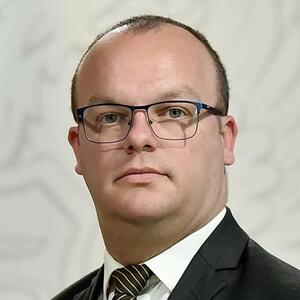
The author is the Minister of Ecology, Sustainable Development and Northern Development in the Government of Montenegro.
See more:
Download the app and follow the news


FOLLOW US ON

