



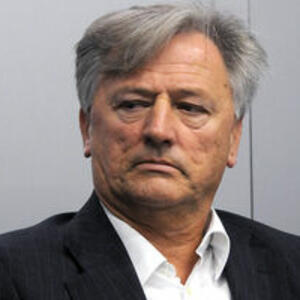
Parliament Speaker and leader of New Serbian Democracy Andrija Mandić recently, speaking about the results of the government after August 30, 2020, particularly highlighted the Electric Power Company of Montenegro. He called the fact that the price of electricity has not been increased since 2021 an "indisputable result", attributing this to the "extremely responsible and homely policy of EPCG, headed by our Milutin Đukanović".
It is difficult to imagine a more open explanation of the political context in which EPCG has been operating for years. Milutin Đukanović is not only the long-time chairman of the Board of Directors of the largest state-owned company - he is also a high-ranking official of the NSD, and his party openly presents stable electricity prices as its own political trophy.
But that's where the problem begins. If the political administration decides to freeze the price of a basic product for years despite rising costs, the company must find another way to preserve its financial strength: cut expenses, increase productivity, and create reserves for bad years. EPCG did the opposite. While prices remained the same, EPCG had to get better - and it got worse.
Instead of rationalization, there was mass party-based hiring and an increase in fixed costs. Instead of investing in efficiency, money was directed to projects that further burdened the company. The purchase of Željezara dragged the power company into a completely foreign activity, with new costs and doubts. Solar capacities were built without a secured network infrastructure, so millions of euros went to waste instead of going to the company's coffers.
The most glaring example is the ecological reconstruction of the Pljevlja thermal power plant: a huge amount of money was spent, the company is financially exhausted, and the goal for which the reconstruction was initiated - full compliance with EU environmental standards - was not achieved. Zoran Radulović recently vividly summarized this management philosophy in the title of his article in Monitor: "EPCG: Instead of electricity, they are selling the future".
Then, the weakened company was hit by something that the management could not directly influence, but had to plan for: drought and unfavorable market trends. EPCG faced this crisis unprepared, financially weakened, and without reserves that would have enabled it to overcome it without state assistance.
Empty reservoirs have reduced hydroelectric power plant production, and high domestic consumption has almost wiped out export potential. EPCG must therefore buy the missing energy. It reached average prices of 160 to over 200 euros per MWh on regional exchanges, while evening peaks exceeded 250 euros. This creates a classic economic scissors: importing electricity for 170 or 200 euros, and selling it to domestic buyers at politically maintained tariffs of around 50 euros, means creating a financial gap that cannot be bridged by marketing, party statements or talk of "home management".
And there is no relief in sight. Without prolonged and heavy rainfall, EPCG could enter the winter with severely reduced hydropower production just as domestic consumption is rising and electricity on the European market is becoming the most expensive. External factors did not create the problem - they merely exposed the consequences of poor management.
It is therefore not surprising that EPCG requested state guarantees of 132 million euros. It is not disputed that the state is helping a company on which the country's energy stability depends. What is disputed is that the aid, which is obviously also used to repair the consequences of the company's financial weakness, is presented as support for development and new investments.
A company that can borrow normally and favorably on the market has no need to seek state guarantees for financing. Therefore, it is clear that the conditions under which private banks finance EPCG have significantly deteriorated.
However, this raises a serious question of compliance with the State Aid Control Act. The current Article 7a stipulates the application of relevant EU rules, which do not treat aid to a company in difficulty as a simple source of new money, but rather condition it on serious restructuring and a plan to return to long-term sustainable operations.
The public, however, has not seen any serious plan for EPCG's financial consolidation. There is no program of cost cutting, review of excessive employment, or exit from failed investments. Instead of consolidation, there are new loans, state guarantees, and talk of "development" - as if the company is not saving itself from the consequences of mismanagement, but preparing for a new development momentum.
As a shareholder of EPCG, I would also like to point out the non-transparent arrangement with Masdar. The management claims that it opens up additional financing space for it, but its terms are not available to the public, nor has the contract been made available to me as a shareholder.
I am not claiming in advance that the arrangement is harmful, but when a company in financial difficulties seeks state guarantees and at the same time concludes a large non-transparent contract that, according to the management, opens up additional financing space for it, it is legitimate and justified to ask what its real financial effect is and whether EPCG has given, perhaps too much, in return.
Why, then, is there no real consolidation? Because it would destroy the political narrative on which the image of a "successful" EPCG has been built for years.
Consolidation would mean admitting failure, cutting costs and party personnel, reviewing investments and, probably, adjusting prices. And since the price freeze has been proclaimed one of the greatest political successes of "our Milutin Đukanović", that success must be maintained at all costs - even at the cost of the company's financial weakening.
Who ultimately pays the bill? If prices were adjusted to real costs, the burden would be primarily borne by consumers, while the state would specifically protect the most vulnerable. That would be fairer and more transparent.
Instead, EPCG was sacrificed for pursuing cheap social policies and supposedly proving political success. When the company began to stumble under the weight of such policies, the bill was not handed over to those who benefited the most from cheap electricity, but to all citizens through the state budget. So, the reward for this policy, through taxes and public revenues, will be equally divided between those who spent hundreds of euros on electricity per month and those whose bills amounted to only a few dozen euros.
The political benefit belongs to the parties in power, and the financial bill - through state guarantees, debts and possible new aid - is paid by all citizens of Montenegro.
If this policy continues until the 2027 elections, EPCG could emerge even more indebted and financially exhausted. Then, after years of talking about “housekeeping,” the same politicians could tell us that the company can only be saved through privatization.
That would be the ultimate paradox of party management of state assets: for a company that has served for years as proof of political success to end up being left to private capital because the very policy of maintaining that "success" has eaten into its financial substance.
Prices have remained the same. But the cost of this policy is yet to be paid.
The author is an economic analyst
See more:
Download the app and follow the news


FOLLOW US ON

