



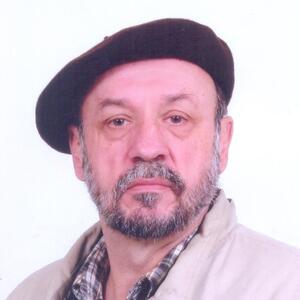
Not long ago, a friend told me that he had been asked by the editor of a newspaper or portal to make a ranking of the 10 best novels from the region. He included two on his ranking list Bulatovićeva novels: “The Red Rooster Flies to the Sky” and “The Hero on a Donkey”. The novels took 9th and 10th place on his list. I share his taste, with a difference in ranking, because I would place these Bulatović novels in 5th and 6th place, right behind the two Andrićeva and two Laliceva Roman.
So much for rankings and the necessary intellectual transgressions they entail.
In Montenegro today, the novelist Miodrag Bulatović Bule is almost unknown. And in a way, even crossed out. This is not a big surprise, because sometimes it happens in society that “blindness” among readers and literary critics prevails, and “you can’t see the forest for the trees,” i.e. the ideas of Miodrag Bulatović.
And it is possible - even very possible - that some other, extra-literary circumstances did not go his way for Buleta either. I am referring to political circumstances and the narrow-mindedness they know how to carry and impose on society as a mandatory (commanding) standard of behavior.
But despite that, Miodrag Bulatović Bule is our literary and cultural "legitimacy" for the Montenegrin and wider environment. And even Europe.
In short. Such a rare kind and type of novelist as Miodrag Bulatović Bule is a spiritual jewel of a people, its culture and its "spark".
Miodrag Bulatović Bule is a great Montenegrin, Serbian, Yugoslav, European... novelist. And now a clarification regarding his nickname - Bule. Around the same time of Bulet's life, there was another person with his surname. His name was Vladimir Bulatovic - VibA solid writer-satirist, but with a more modest talent than Bulet's and the orbit to which he rose.
Miodrag Bulatović's novels do not allow you to eat or yawn while reading them.
Miodrag Bulatović was born in 1930 in Montenegro, in the village of Oklade near Bijelo Polje. He had irregular education, which is more of an advantage than a disadvantage for some creators and artists. They see and create their world as a given, not a given theme imposed from outside.
He also worked as a journalist, which can be an excellent gateway to later literary work and a broader approach to understanding society.
(Journalism connects and "translates" the political goals and visions of the top government on the one hand, and the power of the people's reception for the visions of that same government, on the other. In a way, journalists and journalism educate and even educate the people through critical reflection on both.)
It should also be noted that Bule studied psychology and literature. It is possible that this educational “mix”, along with the personal talent and inner energy that Bule carried within himself, partly contributed to the formation of an atypical “author”.
In this regard, let us note (a dash) that his enormous temperament, dynamism, rhetoric, quiet egocentricity, curiosity, theatricality, humor, and raised eyebrow pose... are very similar to a literary critic. To Borislav Mihajlović - Mihiz. The two of them are poles of one and the same similarity whose opposites only life can create. Not literature or some strenuous literary and critical educational work. The point is, these two literary greats wrote with their "dry" talents and nonconformist critical originalities and observations.
One (Bule) observed and explained life from below, from the perspective of the people, and the other (Mihiz) observed society from above from an elitist perspective, with a distance from the authorities.
Both of them were concerned with the depiction and criticism of the government that masqueraded as various cultural and political forms and institutions.
Miodrag Bulatović Bule is a writer and interpreter of phantasmagoric, grotesque, funny, tragic, black, absurd... reality. But his reality is not painted with a black and white camera. On the contrary. It is a colorful look at various truths and flows of entropy of man, and of society as a whole. He most often describes them - let me repeat - in a humorously black, grotesque, absurd and pessimistic way.
Bulatović writes about marginal people from the bottom of the social hierarchy who have gone to the West in search of a better life. In their new environment, they quickly “see” that they are not fit for modern society, but neither for a return to their traditional society. In other words, Bulatović writes about people who have lost their identity, and cannot or do not know how to accept their new identity and adapt to the new reality and revaluation.
Generally speaking, Bulatović's heroes have lost their "civilizational compass", i.e. their connection with the world, both towards the future and the past.

He writes pessimistically about their resistance to the modern social pyramid of power and man's "written", sealed black destiny. Their destiny is mostly tied to crime and success in that business.
Bulet's pessimism is atypical and different from the column of other writers of despair and hopelessness, such as Samuel Beckett or Giacomo Leopardi(Bulatović's pessimism is not as intellectual as that of these two writers, but rather more Balkan rural.)
Let us express all that has been said in the form of a passing conclusion: modernity (the West) brings only evil and perversity to Bulet's heroes.
To see the color of his characters even more deeply, let's make a comparison in the following sketch with the painter Voj Stanić.
The characters in Bulatović's novel “The Red Rooster Flies to the Sky” and some other novels are similar to the characters in the paintings of Vojo Stanić. Bulatović's characters seem to have stepped out, jumped out of some avant-garde (surreal) paintings of the Herceg Novi magician. It is also possible that maestro Stanić read some of Bulatović's novels that influenced him.
Stanić's paintings (“Studio”, “Wind” or “Beach” for example) shift perspective, combining ordinary scenes from everyday life in Herceg Novi with vast fantastical details.
Some characters in Bulatović's novels (Đuro, Mihailo, Petar or Grdan, for example) also shift the perspective towards opening up themes of human freedom, life and loneliness. In the same way as the painter Vojo Stanić.
Bulatović's “characters” (a rooster, a wolf, and others) are similar to Vojo Stanić's paintings of cats, birds, or fish. Both describe them, that is, they drew them in superb ways.
Bulatović's “red rooster” is no ordinary animal. It is a symbol of man's struggle and quest for freedom. But with limited “flying” powers.
Vojo Stanić also "drew" freedom. Mediterranean freedom, of course, observing and recognizing its importance, universality, and beauty through the narrow window of his studio.
(Ends next Saturday)
See more:
Download the app and follow the news


FOLLOW US ON

