



The draft budget law for 2027 will be submitted to the Parliament within the legal deadline, i.e. no later than November 15, and it is not yet known whether it includes the costs of implementing the "Euro model", how much its implementation will cost the state treasury annually, or what impact it will have on the budget deficit and public debt in the coming year.
Ministry of Finance, headed by the Minister Novica Vuković, confirmed to "Vijesti" that all deadlines related to the preparations of the most important economic law for next year will be met.
"Vijesti" asked whether the draft law on the budget for 2027 will be submitted to the Parliament by November 15, whether the costs of implementing the "Euro model" have already been calculated, and how much its implementation will cost the state treasury on an annual basis. The question was also what the Ministry of Finance's estimates are of the impact of implementing the "Euro model" on the budget deficit and public debt in 2027.
"The Ministry of Finance, as in previous years, will implement all activities related to the preparation of the Budget Law Proposal for 2027 in accordance with the legally prescribed deadlines, in order to comply with the legal obligation to submit it to the Parliament. The public will be informed in a timely manner about all the details of the proposed legal solution," the Ministry of Finance said.
According to the systemic Law on Budget and Fiscal Responsibility, the budget proposal is sent to the Parliament by November 15th.
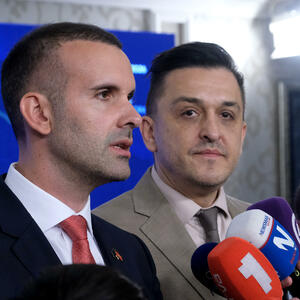
Prime Minister Milojko Spajic presented the “Euro model” in mid-September, which implies an increase in the minimum wage from the New Year for employees in jobs with primary and lower education to 1.000 euros, for employees in jobs with secondary education to 1.250 euros, while the minimum wage for jobs with higher education will be 1.400 euros. In addition, it is planned to adjust pensions four times a year from 2027, in order to fully follow the growth of wages. This reform is accompanied by changes to a set of economic laws that could create a new hole in the budget at an annual level of 650 to 700 million euros, or with the current deficit of around 300 million, the possible shortfall would be around a billion euros.
A set of six laws (amendments to the law on financing local self-government, corporate income tax, mandatory social insurance contributions, personal income tax, pension and disability insurance, and amendments to the Labor Law) that should bring higher salaries and pensions was determined by the Government electronically without the support of the Minister of Finance Novica Vuković, whose department, according to unofficial information from "Vijesti", did not participate in the preparation of these draft laws.
Vuković then officially stated that he needed a few more days to familiarize himself with the proposal for the "Euro Model" program.
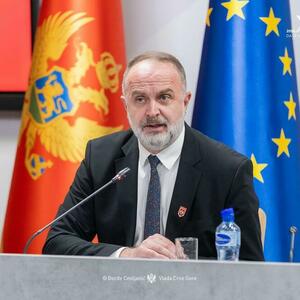
"My colleagues analyzed the laws very quickly. I apologize that it will take me a few days. As the procedure requires, the Ministry of Finance will, absolutely in accordance with the procedure, have a very clear statement throughout the entire process," Vuković said on September 21.
The Minister then assessed, during the annual meetings of the IMF and the World Bank in mid-October in Thailand, that the "Euro model" represents an important step in preparing Montenegro for membership in the European Union and equal participation in the single European market.
He said that European integration must not be reduced only to harmonizing regulations and institutions with European standards.
"Their core goal must be to continue improving the living standards of citizens, valuing work and creating better quality jobs," Vuković said at meetings in Bangkok.
Vuković explained that for years the work of employees in Montenegro had not been adequately valued through the amount of their salaries, and that this disparity had been eliminated and the position of employees had been improved through the previous two economic programs, implemented while preserving the stability of public finances.
He believes that it is also important to build an economy that will provide citizens with prospects for life and professional development, and reduce the risk of labor outflow, which other countries have faced during the enlargement process.
Since the announcement of the "Euro Model", the Chamber of Commerce (PKCG), the Employers' Union and the Union of Municipalities have been demanding its review and correction due to, as they claim, the negative consequences it will have. These associations have sent their corrections and asked Prime Minister Spajić for meetings and a statement, but to date their requests have not been responded to.
On October 30, the PKCG reminded that Spajić announced a new model for increasing salaries 44 days ago.
"To implement this model, the government has established a set of six laws that provide for changes to labor and tax legislation, the abolition of contributions for pension insurance and unemployment insurance, as well as changes to the financing of local governments. Since the usual procedure in the preparation of the draft law was missing, the Chamber of Commerce has invited the Prime Minister for a meeting on several occasions, the first time on September 24," the Chamber of Commerce and Industry of Montenegro announced.
The Association of Municipalities announced on the same day that they had submitted to the Prime Minister an assessment of the impact of the "Euro Model" on local public revenues and a proposal for compensatory measures, which was supported by all 25 municipalities.
The common request of local governments, as they said, is to ensure the stability of their budgets and prevent the reduction in revenues, with the simultaneous increase in expenditures, from jeopardizing development projects and the provision of services to citizens.
It was proposed to hold a new meeting of the presidents of municipalities and mayors with the Prime Minister, with the participation of the ministers responsible for implementing the proposed measures.
The Employers' Union of Montenegro (UPCG) invited Prime Minister Milojko Spajić to a meeting on October 14 and proposed a package of measures to support the economy, assessing that the announced wage increase must be accompanied by concrete solutions that will enable companies to bear higher costs, preserve jobs and continue to invest in development. The Employers' Union is calling for minimum wages of 800 and 1.000 euros.
Since the announcement of the "Euro Model", the Chamber of Commerce, the Employers' Union and the Union of Municipalities have been demanding its review and correction due to what they claim are the negative consequences it will have. These associations have sent their corrections and asked Prime Minister Spajić for meetings and a statement, but to date their requests have not been responded to.
Vuković to answer parliamentary questions as soon as possible
The Democratic Party of Socialists (DPS) asked the Parliament leadership to urgently ensure the arrival of Finance Minister Novica Vuković at the first upcoming session scheduled for parliamentary questions and answers on the "Euro model".
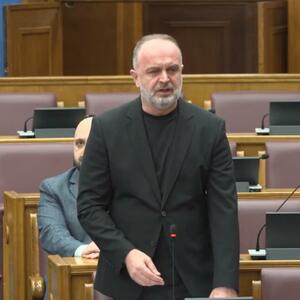
"It has been 47 days since the presentation of the Euro model, and there is no position from the Ministry of Finance. Not only is there no position, but there is no Minister of Finance (Novica Vuković). We still do not have the Minister of Finance on the schedule for parliamentary questions. There is no plan for when he will answer the questions of the MPs, and only the DPS parliamentary group has seven questions," said the head of the DPS parliamentary group, Andrija Nikolić, in a statement yesterday.
He called on both the Central Bank and the Fiscal Council to give their opinion on the so-called Euro model.
DON'T MISS IT
See more:
Download the app and follow the news


FOLLOW US ON

