



When facts are ignored or not accepted, and when mythomania and personal opinions overcome reason, Ratko Mladic is a hero, not a convicted war criminal for his bloody role in the bloody collapse of the SFRY three decades ago.
Historians agree that the facts about the general are well known, but often unacceptable or not important enough to be used against him, and that a mythical story has been crafted about Mladić, elements of which are not questioned or critically examined.
Responses from historians from Serbia and Croatia, Dragan Popović i Hrvoje Klasic, who spoke to "Vijesti" about the attitude towards the commander of the Army of Republika Srpska, testify that there are different views on the way the image of Mladić is being shaped today - from assessments that the facts are being suppressed and relativized, to the view that they are known, but that part of society does not consider them negative...
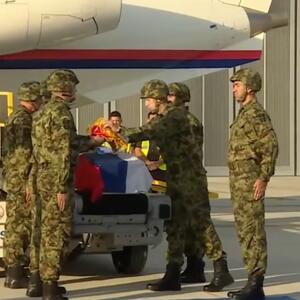
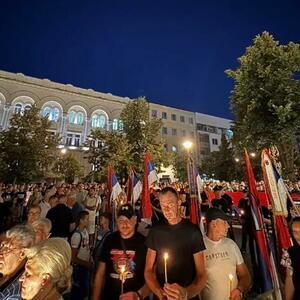
Mladić died last week in The Hague, where he was serving a life sentence for genocide and other war crimes. It was announced that he would be buried today at the Topčider cemetery in Belgrade. Local media reported that the state had announced that Mladić would receive any honors his family desired, although some NGOs warned that state honors were not legally permitted for convicted persons.
DON'T MISS IT
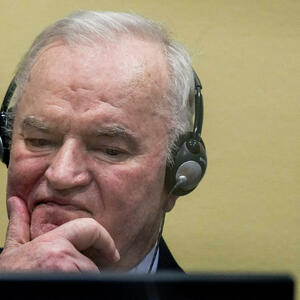
Mladić was sentenced to life imprisonment in 2021 after being found guilty of genocide against Bosniaks in Srebrenica, crimes against humanity against Muslims and Croats in 15 municipalities of BiH, terrorizing civilians during the siege of Sarajevo, and taking United Nations peacekeepers hostage.
Popović: Turned into a myth, crimes are ignored
Serbian historian Dragan Popović told "Vijesti" that, essentially, all the facts are being suppressed when Mladić is presented to the public in Serbia today.
He pointed out that Mladić has been turned into a myth, into a closed story whose elements are not questioned and where there is no room for critical examination based on facts.
"They don't even go into the crimes themselves, in order to deny or relativize them. The crimes are ignored and presented as part of a war that happened a long time ago and where all sides committed crimes," said Popović.
He pointed out that the central element of the myth about Mladić is the notion that it is a grand conspiracy against the Serbian people involving major world powers:
"Mladić, according to this narrative, is a victim of the international community, i.e. the Western powers that are trying to destroy Serbia."

Popović emphasized that this is why there is much more talk today about The Hague's decisions regarding Mladić's health condition than about decisions related to determining his criminal responsibility.
"Mladić is a hero, not of the fight against Bosniaks, but of the fight against the international conspiracy against Serbs and Serbia. Thus, the Serbian government, which imposes this story, also becomes part of the heroic narrative and someone who supposedly opposes powerful forces and defends the Serbian people from them. Cheap propaganda from a Serbian authoritarian leader, but, unfortunately, it still gets through to some people," said Popović.
Klasić: Most people don't accept well-known facts
On the other hand, Croatian historian Hrvoje Klasić assessed that nothing is being kept quiet, neither about Mladić, nor about many other war criminals and war crimes.
Klasić said that the facts about Mladić's role are well known, but that most people either do not accept them or do not consider them important enough to incriminate him.
"Specifically, did Ratko Mladić command the Army that carried out ethnic cleansing and killed innocent civilians, ultimately committing genocide? Yes - but because it protected the Serbian people and because it was thanks to these actions that the Republika Srpska was created," Klasić said.

He said that it would be easier to understand what is currently happening in Serbia and Republika Srpska if they said: "These people don't know, these people haven't had the opportunity to hear, something is being kept quiet."
"I think that today, when we live in a world of the internet and information that is available to absolutely anyone with a mobile device in their pocket, things cannot be kept quiet," Klasić pointed out. He said that the facts were not kept quiet, but that the problem lies in the fact that people do not perceive them as something negative.
Shaping the historical memory of younger generations
Popović, answering the question of whether a generation that did not experience the war of the 1990s could develop a completely different image of Mladić, said that "it absolutely can."
"The narratives that are dominant in Serbian society do not include specific events from those wars, nor do they take into account historical facts. It is a myth, and it in itself does not require any reexamination," Popović said.
He said that his greatest fear is that the general impression will remain that this war was just one of the regular episodes in which Balkan peoples slaughter each other and in which we can always expect atrocities as accompanying war folklore.
"There are historical facts, there is the right of victims and entire societies to the truth, and there is a context in which wars were provoked and fought, and crimes committed in the name of nationalist ideologies. There will be a great struggle in the future to preserve these facts and show them to future generations, in order to wrest them from the clutches of historical revisionism whose goal is to serve the very ideology that led to the wars - nationalism," Popović pointed out.
DON'T MISS IT
Klasić, answering the question of whether a generation that did not experience the war of the 1990s could develop a completely different image of Mladić, said that he could not.
He said that the younger generations in Serbia, Bosnia and Herzegovina, primarily in Republika Srpska, did not have the opportunity to hear a sufficiently critical account of Mladić's role and the wars of the 1990s in the dominant public and educational space.
"Generations of people born in the 1980s, let alone generations born in the 1990s and 2000s and beyond, are growing up in a society in which neither in the education system nor in the public sphere, from journalists, politicians, intellectuals, could they hear anything negative in the mainstream about Ratko Mladić, nor anything negative at all about the politics of Belgrade, Banja Luka, Pale, about what happened in the 1990s," said Klasić.
He pointed out that there are individuals who oppose this, but that they are in a large minority.
"It should be said that today if you live in Serbia or Republika Srpska and want to question that narrative and those facts, you will find yourself in an unenviable social position. Whether you work somewhere, whether at school, at university, you will be judged for such an attitude, to say nothing of worse. I know intellectuals who had to leave their cities under threat precisely because they questioned such narratives," Klasić pointed out.
He said he fears that, unlike the people who participated in the whole story and who are somehow aware of what was happening, regardless of what they may not want to admit to themselves or others, most young people only have what they see and hear at school, on television, from politicians and in their families.
Popović: Victims and crimes suppressed from the dominant historical narrative
Popović said that historical memory has been completely altered through the main instruments of history politics under the control of the Serbian authorities - the media, textbooks, institutions.
He assessed that the dominant image has been completely cleansed of any real historical content, especially victims, crimes and war context. “The wars are no longer an attempt by Milošević’s government to redraw the borders of post-Yugoslav states, but are the result of a conspiracy and struggle of neighboring peoples who are presented as eternal enemies of the Serbs, with the alleged support of great powers, which are also presented as part of an anti-Serbian conspiracy,” Popović pointed out.
He said that, in order to make the Serbian side's struggle in the 1990s look more impressive, enemies were added later, and today the myth is being promoted that the VRS fought against Al Qaeda in Bosnia.
"So, anything is allowed when it comes to fabricating history for the very tangible daily political benefit of the Vučić regime," said Popović.
Bojović and Asanović go to the funeral on behalf of the DNP
The Democratic People's Party (DNP) announced yesterday that the funeral of Ratko Mladić will be attended by MP and member of the party's Presidency, Vladislav Bojović, and Mihailo Asanović, president of the Zeta Municipality and member of the Presidency.
On behalf of DNP president Milan Knežević, who cannot attend the funeral that day due to previously scheduled activities in the US, his brother Mirko will attend, the statement added.
The funeral will also be attended by the president of Free Montenegro, Vladislav Dajković, with a delegation of the party's leadership.
DON'T MISS IT

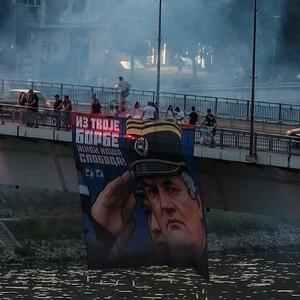
The Serbian Cultural Center "Patriarch Varnava" from Pljevlja announced that it will organize a bus to bring interested citizens to the funeral, and several cities in Bosnia and Herzegovina have also organized or announced transportation for citizens and former members of the Army of Republika Srpska who wish to attend the funeral.
See more:
Download the app and follow the news


FOLLOW US ON

