



The Metropolitanate of Montenegro and the Littoral has not been officially announced the inspection by the Serbian Orthodox Church (SPC) commission, which is allegedly supposed to determine whether there are administrative and financial failures in that church institution, nor are they expecting such a visit in Cetinje - "Vijesti" has learned.
A source close to the Metropolitanate said that there has been no official announcement of any kind of control, and that he believes that there are no reasons for such a thing at all, so they do not expect it.
"... Especially in these sensitive and turbulent times, when there is speculation in the media and on the public stage about various possible political pressures on the Church," said the newspaper's interlocutor.
The Belgrade portal "Nova.rs" announced yesterday that the Metropolitan of Montenegro and the Littoral would Joannikius could soon find himself under "investigation" by the Serbian Orthodox Church commission, which, according to the official explanation, should analyze the functioning of the Metropolitanate and determine whether there are administrative and financial failures. However, the media claims that the real reason why Joanikije is "under scrutiny" is his public disagreement with the policies of the Serbian president's regime Aleksandar Vučić in Belgrade, but also his refusal to withdraw his signature from the letter of support that he, together with five other bishops of the Serbian Orthodox Church, sent to students and citizens who were protesting in Serbia.
The commission that is supposed to analyze the work of the Metropolitanate and the way it is managed by Joanikije, writes Nova.rs, will be composed according to an almost identical model to the one sent to the Žič eparchy. The media outlet reminds that after that control, the metropolitan Justin at this year's SPC Assembly, suspended due to, as officially stated, questionable material and financial dealings.
"Nova.rs" sources, however, claimed that the real reason for the showdown with Justin was that he was the only bishop based in Serbia who openly supported the student-citizen protests, and that his dismissal represented a purely political order from the very top of the government.
The media outlet states that the idea is to present the control of the finances of the Metropolitanate of Montenegro and the Littoral as a routine, systemic check. Therefore, the commission is supposed to visit Berane, the seat of the Metropolitan of Budimlje and Nikšić, before arriving in Cetinje. The method, and check the operations of the Diocese of Budimlje-Nikšić.
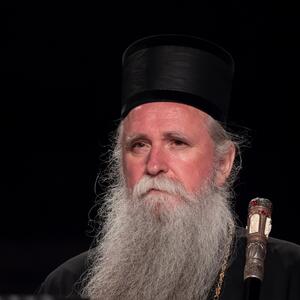
The Patriarchate in Belgrade did not respond to "Vijesti"'s question yesterday whether the information published by "Nova.rs" was accurate.
"Exchange of views" with Vučić
The Cetinje Metropolitanate opposed Vučić in early August, after the Serbian president said in early August that the 2020 liturgies - which began due to amendments to the Law on Freedom of Religion - actually started when "some people wanted to create an Orthodox church in Montenegro, just to erase the 'Serbian' thing". He also spoke of "dangerous and wicked" ideas in the church, and of alleged intentions to "federalize and confederate" the Serbian Orthodox Church. "These are so-called polycentric ideas, and now lately you have been hearing this from prominent Serbian nationalists - ideas about polycentric Serbism. This is the death of the Serbian people, this is the death of the Serbian church," Vučić added in early August.
The Metropolitanate of Montenegro and the Littoral responded to the President of Serbia, stating that Vučić's statements were unclear, and that the uninvited interference of politicians in church matters does not bring good to the state and the church.
"... We consider it unacceptable that these confused, yet loud accusations about 'evil and dangerous ideas in the church' are repeated continuously, and very unhealthy that they are, as a rule, linked to the time of the liturgy in Montenegro 2020, and that through some allusions, incomplete and inaccurate, they are directed towards 'some' who have 'tried' to do 'something' with the church in Montenegro," the Metropolitanate said in a statement.

However, the Diocese of Budimlje-Niksic stood in defense of the President of Serbia, stating that "his messages bring peace among the people of Sveti Sava and preserve the unity of the Serbian Orthodox Church."
"His (Vučić's) public emphasis on the importance of preserving church unity testifies to a high responsibility towards the spiritual identity of our people...", they emphasized.

After a message was sent from Cetinje to the President of Serbia, an organized campaign was launched by Belgrade tabloids, close to the local authorities, who "woven" the narrative that the Metropolitanate had intentions to create a Montenegrin church, while Methodius was widely praised.
Plans for the Boka Kotorska Eparchy
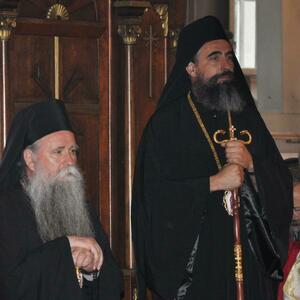
The conflict with Belgrade and the campaign by local tabloids raised the question of how the Metropolis could be "punished", and one of the possible options mentioned was the potential establishment of the Boka Kotorska Eparchy, which has been written about before. Serbian Patriarch Porphyry said in mid-August that the Serbian Orthodox Church "never even thought about, let alone discussed, the establishment of the Boka Kotorska eparchy."
DON'T MISS IT
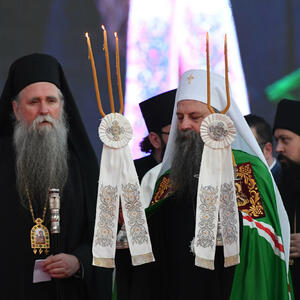
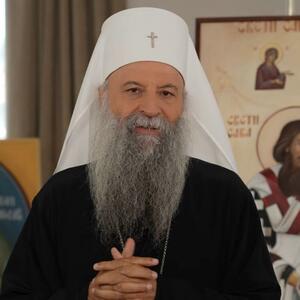
The story of the "seizure" of Boka from the Metropolitanate was current in February, after the Belgrade newspaper "Danas" announced, citing information from the top of the Serbian Orthodox Church, that Porfirije and "his spiritual father", Bishop of Bačka Irenaeus, they plan to "leave" the Metropolitanate without Boka at the session of the Serbian Orthodox Church Assembly in May.
That media outlet claimed that there was speculation about the division of the Eparchy of Žička, but also the Eparchy of Zahumlje and Herzegovina, which could allegedly be left without Dubrovnik.
The Metropolitanate of Montenegro and the Littoral told "Vijesti" at the end of February that there were no ecclesiastical reasons for separating Boka Kotorska from the Metropolitanate, claiming that they did not know where such a "rumor" came from, but that, as they said, it seemed to have "primarily political motives."
"If they were to come true, it would represent an attack on the historical continuity, centuries-old heritage and integrity of the Metropolis," they stated at the time.
The editorial team was then told by several sources familiar with the events in the Patriarchate in Belgrade and the Metropolis in Cetinje that there were stories in the Serbian Orthodox Church about the separation of Boka. One interlocutor claimed that it was an alleged attack by Porphyry on Joanniki, another that it was the same thing - the Serbian Patriarch's response to the alleged objections of the Cetinje head to some moves by the church's top brass, and a third - that the alleged plan to redraw the borders of the Metropolis existed, but that he (the interlocutor) did not think that it would happen at the Parliament in May, given the already existing frictions in the Serbian Orthodox Church.
However, "Vijesti" was unable to officially confirm either the writings of "Danas" or the claims of the source, and the issue was not on the agenda at the Serbian Orthodox Church Assembly.

Joanikije under attack from student support
Joanikije has been under attack from Belgrade since the end of February last year, when he signed a letter condemning allegations that students protesting in Serbia are "Serbian Ustashas", a move that was not approved by the regime in Belgrade, to which the top of the Serbian Orthodox Church is also linked.
A few days later, Belgrade tabloids demanded that Joanikije withdraw his signature from the letter, saying that he had joined in a public attack on Patriarch Porfirije and the Metropolitan of Kruševac. Davida (who is the author of the text in which the students were called "Serbian Ustashas"), and that he "joined the ranks of those who do not wish well for the Serbian people and Serbia". This was stated in an article by the little-known portal "Sunčanik", close to the Serbian Orthodox Church, and which was reported by the local tabloid press.
Another signatory of that letter, until recently Metropolitan Justin of Žička, was removed from that position in February by a decision of the Synod of the Serbian Orthodox Church, which accused him of "persistently deceiving the public that he was politically persecuted."
The Synod at the SPC Assembly in May confirmed the decision to dismiss Justin. 27 bishops voted for Justin's dismissal, while eight abstained. Six bishops expressed a dissenting opinion, including Joanikije.
DON'T MISS IT

See more:
Download the app and follow the news


FOLLOW US ON

