




The Ministry of Justice stated that only after monitoring the implementation of the existing and proposed provisions of the Criminal Code (CC), an expert assessment by the competent working group and consultations with the European Commission can it be assessed whether there is a need to include a criminal offense prohibiting the glorification of war criminals in that regulation.
Yesterday, when asked by "Vijesti" whether the Criminal Code should be amended to also sanction the glorification of persons finally convicted of war crimes, and not just the public approval or denial of crimes, the department said that Article 370, paragraph 2 of the Criminal Code already regulates the area of genocide, crimes against humanity and war crimes.
This provision establishes criminal liability for publicly approving, denying the existence of, or significantly minimizing the gravity of genocide, crimes against humanity, and war crimes committed against a protected group or its member, if such conduct is likely to lead to violence or incite hatred. It is punishable by imprisonment of six months to five years.
DON'T MISS IT
The condition, the Ministry reminds, is that these criminal offenses have been established by a final judgment of a court in Montenegro or an international criminal court.
They emphasize that such a legal solution is in line with international and European standards in the field of combating racism, xenophobia and hate speech, while maintaining a balance with freedom of expression.
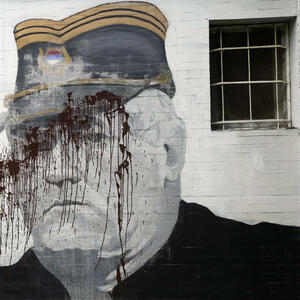
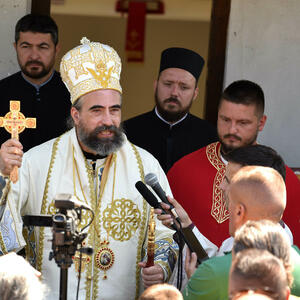
However, this provision does not explicitly state that glorification of war criminals, and not just crimes, is punishable, which is why such cases often end with the dismissal of criminal charges. The latest example of this is the decision of the Bijelo Polje Higher State Prosecutor's Office to dismiss charges against the Metropolitan of Budimlje-Niksic. The method, assessing that in last year's speeches in which he praised the notorious Chetnik commander Pavle Đurišić - there is nothing controversial.
Also, a recent death Ratko Mladić It has sparked a wave of praise for the former commander of the Army of Republika Srpska, who was found guilty by the Hague Tribunal of genocide in Srebrenica, crimes against humanity and violations of the laws and customs of war in Bosnia and Herzegovina (BiH).
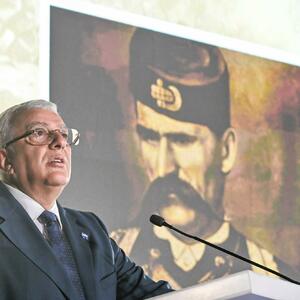
He was also celebrated by Montenegrin politicians, as well as a part of the local clergy of the Serbian Orthodox Church, while the head of parliament Andrija Mandic announced that he had sent a telegram of condolences on the occasion of Mladić's death, which is why a decision will be made on September 24th about his removal from office.
DON'T MISS IT

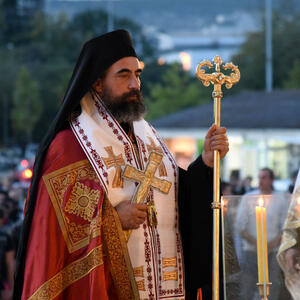
Due to Mladić's glorification, the Podgorica Higher State Prosecutor's Office has filed a case against The methodOn August 28, at the Piva Monastery, he said that the people in Mladić "recognized all those wonderful and holy qualities of Serbian warriors and knights."
DON'T MISS IT
Severe hate speech is introduced
The Ministry of Justice reminds that the Government has determined and submitted to the Parliament a Proposal for amendments to the Criminal Code introducing a new criminal offense - serious hate speech.
The goal, as they explained, is to enable a criminal legal response to the most serious forms of public expression of hatred which, given their content, manner and context, create a real danger of violence or incitement of hatred towards a specific group or its member.
"Considering, on the one hand, the existing incrimination under Article 370, paragraph 2 of the Criminal Code, and on the other hand, the proposed additional strengthening of protection through the new criminal offense of serious hate speech, we believe that the current and proposed legal framework already provide appropriate instruments for a criminal legal response to the most socially dangerous forms of this behavior," the department headed by him said. Bojan Božović.
They state that any possible further initiative to introduce new criminal offenses or expand existing incriminations should be carefully considered in advance within the working group for amendments to the Criminal Code and consulted with the European Commission.
"This is particularly important given the need to maintain full compliance with international and European standards, the principle of the specificity of criminal law and the proportionality of restrictions on freedom of expression, as well as the need to avoid unnecessary overlap or double criminalization of the same or essentially identical conduct," the Ministry said.

As they emphasized, at this point, priority should be given to the consistent application of existing provisions and proposed new mechanisms, while monitoring their implementation in practice. Only then, they added, based on the results of the application of the regulations, the expert assessment of the working group and consultations with the European Commission, could it be assessed whether there is a need for additional amendments to the Criminal Code.
The European Union Parliamentary Group announced yesterday that it will propose amendments to the Criminal Code that will "clearly and unequivocally stipulate that public glorification of persons convicted by a final verdict of genocide, crimes against humanity and war crimes constitutes a criminal offense."
DON'T MISS IT

Many countries across Europe have provisions similar to those in the Montenegrin Criminal Code, and BiH is the only one that has explicitly banned the glorification of war criminals.
BiH has stipulated the following in its Criminal Code (Article 145a, paragraph 6):
"Whoever grants recognition, award, monument, reminder or any privilege or similar to a person convicted by a final judgment of genocide, crime against humanity or war crime, or names a public facility such as a street, square, park, bridge, institution, establishment, municipality or city, settlement and populated area, or similar, or registers a name after or in the name of a person convicted by a final judgment of genocide, crime against humanity or war crime, or in any way glorifies a person convicted by a final judgment of genocide, crime against humanity or war crime, shall be punished by imprisonment for at least three years."
Spain's Law on Democratic Memory, which is a misdemeanor, not a criminal offense, has imposed fines of up to 150.000 euros for publicly glorifying the dictatorship. French Franca, its leaders and symbols.
Freedom of speech must not be a cover for normalizing war crimes
The European Union announced that it will submit the amendments to the Criminal Code to parliamentary procedure in the coming days.
"Our intention is for the norm to be precise enough to prevent abuses, but at the same time clear enough that the glorification of finally convicted war criminals can no longer pass through legal loopholes," they said in a statement.
They added that freedom of speech is one of the fundamental values of a democratic society, but that it must not be a cover for normalizing war crimes and humiliating their victims.
The European Union said it expects that a broad political consensus can be reached on this issue.
See more:
Download the app and follow the news


FOLLOW US ON

