




Murals, poems, graffiti, speeches, banners, symbols, written words, marking anniversaries and public gatherings that glorify finally convicted war criminals - could in the future be included in the Criminal Code (CC) if the Parliament accepts an amendment by the ruling Bosniak Party (BS) to that effect.
The BS parliamentary group proposed yesterday that the existing Article 370 of the Criminal Code, which already sanctions certain forms of public approval, denial and justification of genocide, crimes against humanity and war crimes, be expanded to criminally punish the glorification of persons who have been finally convicted of these acts.
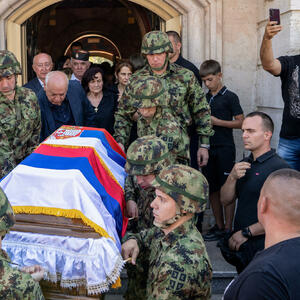
The BS proposal comes at a time when a public debate is underway about whether there is a legal gap in Montenegrin legislation that allows for the unpunished glorification of finally convicted war criminals, and after the recent death of Ratko Mladić has sparked a wave of praise for the former commander of the Army of Republika Srpska, who was found guilty by the Hague Tribunal of genocide in Srebrenica, crimes against humanity and violations of the laws and customs of war in Bosnia and Herzegovina (BiH).
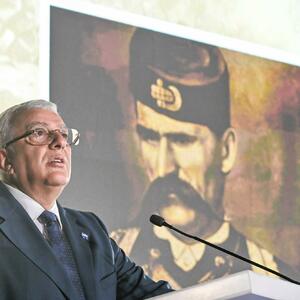
He was also praised by Montenegrin politicians, as well as a part of the local clergy of the Serbian Orthodox Church, while the head of parliament Andrija Mandic announced that he had sent a telegram of condolences on the occasion of Mladić's death, which is why a decision will be made on September 24th about his removal from office.
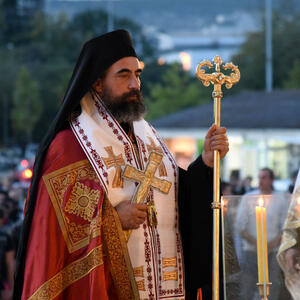
The Podgorica Higher State Prosecutor's Office has also formed a case regarding the statement of the Metropolitan of Budimlje-Niksic. The method, who, speaking about Mladić, said that the people "recognized in him all those wonderful and holy qualities of Serbian warriors and knights."
The current Criminal Code contains a provision (Article 370, paragraph 2) that establishes criminal liability for publicly approving, denying the existence of, or significantly minimizing the gravity of genocide, crimes against humanity, and war crimes committed against a protected group or its member, if such conduct is likely to lead to violence or incite hatred. This is punishable by imprisonment for six months to five years.
However, this provision does not explicitly state that glorifying war criminals, and not just crimes, is punishable, which is why such cases often end with the dismissal of criminal charges. The latest example of this is the decision of the Bijelo Polje Higher State Prosecutor's Office to dismiss charges against Metropolitan Metodije of Budimlje-Niksic, assessing that in last year's speeches in which he glorified the notorious Chetnik commander Pavle Đurišić - there is nothing controversial.
DON'T MISS IT




What penalties does BS propose?
According to the BS amendment, which "Vijesti" has had access to, it would be punishable to publicly glorify, glorify, justify or otherwise affirmatively present a person who has been convicted of genocide, a crime against humanity or a war crime, as well as to present him as a hero, role model, liberator, defender or moral authority. This would be punishable by a sentence of six months to five years in prison.
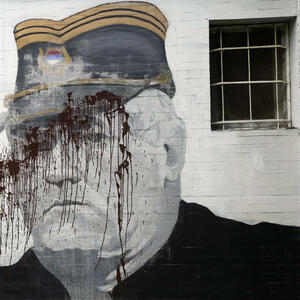
The BS also specified in the amendment what would be considered glorification of a war criminal - speech and written word, publications in the media and on social networks, internet platforms, electronic communications, audio-visual content, photographs, posters, banners, graffiti and murals, but also songs, symbols, marking anniversaries and organizing public gatherings, or glorification in another way accessible to a large number of people.
The provision would apply only to persons whose responsibility for genocide, crimes against humanity or war crimes has been established by a final judgment of a court in Montenegro or an international criminal court.
"If the act (glorification of a war criminal) was committed through coercion, abuse, endangering security, exposing national, ethnic or religious symbols to ridicule, displaying or using symbols that glorify or affirm a legally convicted war criminal, damaging other people's property, desecrating monuments, memorials or graves, the perpetrator shall be punished by imprisonment for one to eight years," the amendment states.
In more serious cases - including when the act of glorifying war criminals was committed through abuse of position or authority, through media or communication technologies that make the content available to an unlimited number of people, or if these acts resulted in riots, violence or other serious consequences for the common life of peoples, national minorities or ethnic groups living in Montenegro - a sentence of two to ten years in prison would be provided.
"Vijesti" yesterday asked the ruling parties - the Europe Now Movement, New Serbian Democracy, the Democrats and the Socialist People's Party, as well as the opposition Civic Movement URA and the Democratic People's Party whether they would support the BS amendment, but none of them responded to the inquiry.
The opposition Democratic Party of Socialists told "Vijesti" on Tuesday that they consider it completely justified to open a debate on amendments to the Criminal Code in a way that would introduce a special criminal offense that would sanction the glorification of finally convicted war criminals, while their colleagues from the European Union announced on Wednesday that they would propose amendments to the Criminal Code that would clearly stipulate this.
The Ministry of Justice told "Vijesti" two days ago that mechanisms already exist to counter the glorification of war criminals, taking into account the existing provisions of the Criminal Code regarding the denial of genocide, and the proposed criminal offense of serious hate speech. They assessed that any further expansion of criminal offenses should be previously considered by the competent working group and consulted with the European Commission.
Many countries across Europe have provisions similar to those in the Montenegrin Criminal Code, and BiH is the only one that has explicitly banned the glorification of war criminals. BiH has stipulated the following in its Criminal Code (Article 145a, paragraph 6):
"Whoever grants recognition, award, monument, reminder or any privilege or similar to a person convicted by a final judgment of genocide, crime against humanity or war crime, or names a public facility such as a street, square, park, bridge, institution, establishment, municipality or city, settlement and populated area, or similar, or registers a name after or in the name of a person convicted by a final judgment of genocide, crime against humanity or war crime, or in any way glorifies a person convicted by a final judgment of genocide, crime against humanity or war crime, shall be punished by imprisonment for at least three years."
BS: Prevent the normalization of war criminal ideology
Yesterday, BS said that Montenegro must have a clear legal limit to attempts to present war criminals as heroes, to glorify their deeds and thus insult victims, relativize war crimes and incite new divisions in society.
They remind that this is not a new initiative by BS.
"Our MPs have previously pointed out the need to clearly sanction the glorification of war criminals and the spread of narratives that glorify crimes and criminals through amendments to the Criminal Code. After recent events and public messages that have reopened the issue of relations towards war criminals and their victims, it has become even clearer that Montenegro must have a precise and efficient legal mechanism that will protect the dignity of victims and prevent the normalization of war criminal ideology," the statement reads.
See more:
Download the app and follow the news


FOLLOW US ON

