




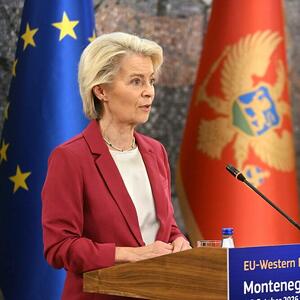
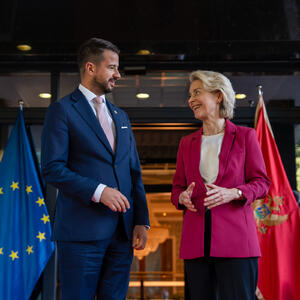
The European Commission proposed today to the EU Council and the European Parliament a new model for the enlargement of the European Union that is not only about a faster path to membership and access to European funds, but also a strong system of safeguards that should guarantee that reforms, the rule of law and democratic standards do not end the moment a country becomes an EU member.
The Commission proposes adopting a system in which there are mechanisms for responding if a country, after accession, begins to deviate from the standards it previously accepted.
According to documents published on the EC website under the title "Preparing for a Wider Union", the first level of protection refers to sectoral clauses in the areas of economy, internal market, justice and home affairs. If serious disruptions or non-fulfilment of obligations occur after membership, the EU could activate special safeguard measures, and their duration can be extended at the proposal of the European Commission.
DON'T MISS IT
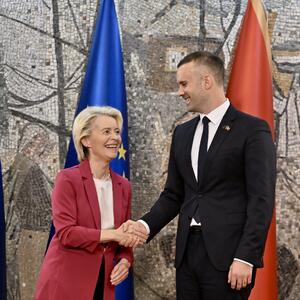
The second safeguard mechanism operates even before formal accession to the Union. In the period between the signing of the accession treaty and full membership, the European Commission continues to monitor. If serious setbacks in the implementation of the commitments undertaken are identified during that period, the possibility of postponing accession itself is envisaged.
The most far-reaching mechanism, according to the document, is an institutional safeguard clause that could be in place for 15 years after accession. It would allow the EU to react in the event of serious violations of fundamental European values, including the rule of law, democracy and the principle of sincere cooperation. The envisaged reaction could go as far as the suspension of voting rights in the EU Council.
For the citizens of Montenegro, this would in practice mean additional institutional protection against the possibility of the reforms implemented during the negotiations being reversed or weakened after membership. Membership would therefore not represent the end of control, but the beginning of a period in which the state would continue to be under strong obligations to safeguard the independence of institutions, democratic standards and the rule of law.
Such a system is particularly valid in the field of combating corruption and misuse of European funds. According to the document, all new members must participate in the work of the European Public Prosecutor's Office – EPPO from day one. Therefore, Montenegro should prepare legislation and institutions during the negotiations so that European and delegated European prosecutors can investigate and prosecute possible misuse of European funds on its territory.
At the same time, stricter control mechanisms accompany very concrete economic benefits.
Back in June, the European Commission announced a special model for transitioning from pre-accession assistance to full participation in the European Union budget, with the aim of ensuring that there is no financial or administrative interruption in the implementation of reforms and capital investments at the time of accession.
Funds are foreseen through Cohesion Policy for reducing economic, social and regional disparities, gradual introduction of direct payments to Montenegrin farmers and rural development funds, additional funds for security, border management and asylum, as well as full participation in Interreg cross-border cooperation programs.
For citizens, this could mean more investment in local infrastructure and less developed regions, more opportunities for farmers and rural households, greater access to European development programmes and stronger funding for projects of public interest.
According to published documents, citizens of candidate countries should experience some of the benefits even before formal membership.
Montenegro is already included in the Single Euro Payments Area - SEPA, which enables cheaper and faster financial transactions with partners from the European Union. The document also outlines preparations for the expansion of the European "Roam Like at Home" regime to Montenegro and other Western Balkan countries. This means lower money transfer costs, simpler business with the EU and, once the roaming regime is implemented, more affordable mobile communication when traveling.
The new model also envisages the gradual inclusion of the candidate, namely Montenegro, in European institutions before membership. After the negotiations are completed, representatives of the country should participate in the work of EU agencies and European Commission expert groups, while after the signing of the Accession Treaty, Montenegrin officials and parliamentarians could receive observer status without voting rights in the bodies of the Council of the EU and the European Parliament.
This prepares institutions in advance for functioning within the EU system, which should reduce the risk that formal membership will come before the administration is able to use its rights and opportunities.
The changes could also speed up the negotiations themselves, although it is not clear whether they will apply to the rest of Montenegro's EU integration process. The European Commission proposes moving to qualified majority voting when opening clusters and making intermediate decisions, which would reduce the possibility of a single member state blocking individual steps for bilateral reasons. Unanimity would remain necessary for the final decision on admission and ratification of the accession treaty.
However, under the proposed framework, Montenegro would commit itself during the initial period of membership not to use its veto power to block the accession of future candidates or to introduce bilateral disputes into the EU enlargement process.
See more:
Download the app and follow the news


FOLLOW US ON

