



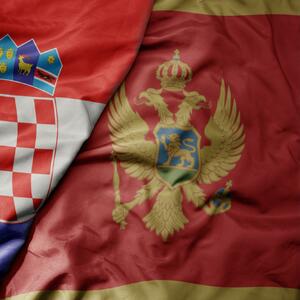
The Montenegrin Parliament adopted amendments to the Law on Memorials the day before yesterday that provide for the possibility of subsequent approval of memorials that have already been erected, but for which the legally prescribed procedure has not been previously carried out, thus opening the possibility for the Government to make a decision on subsequent approval of the memorial plaque in Morinje, the preservation of which is one of Croatia's requests in resolving bilateral issues between Podgorica and Zagreb.
Croatia is seeking the permanent preservation of a memorial plaque dedicated to Croatian prisoners of war erected on 10 October 2022 at the former JNA collection centre in Morinje (Kotor Municipality). Shortly after its installation, the Montenegrin inspection ordered its removal due to the lack of formal consent from the Government of Montenegro and the prescribed procedure, which became a point of contention.
Amendments to the Law on Memorials were submitted two days ago by the Bosniak Party (BS), which told "Vijesti" that this refers to the memorial plaque in Morinje.
"Unfortunately, these changes passed without the votes of the opposition, which advocates normalizing relations with Croatia," BS said.
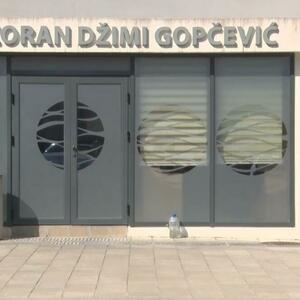
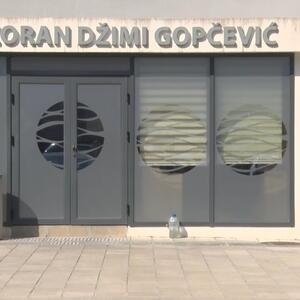
The day before yesterday, at the proposal of the Europe Now Movement MPs, the Parliament also adopted amendments to the Law on Sports, which open the possibility for the Government to delete Zoran Gopčević's name from the name of the Kotor swimming pool, which is also one of a total of eight open bilateral issues between Montenegro and Croatia, the resolution of which conditions Montenegro's entry into the European Union.
The bill proposed by the BS and adopted by the Parliament envisages the introduction of a new Article 16a, which would allow the Government of Montenegro, in the event of a special public interest, to make a decision on the subsequent approval of such memorials and their retention at the designated location.
The explanatory memorandum to the proposal states that the special public interest would be assessed based on the historical and social significance of the event, person or circumstance to which the memorial refers, the importance of preserving the memory of victims and suffering, the contribution to fostering a culture of remembrance and protecting human dignity, as well as the historical foundation and content of the memorial itself.
The BS explained that the current Law on Memorials prescribes the conditions, method and procedure for erecting, protecting and maintaining memorials, but does not specifically regulate the possibility of subsequently approving already erected memorials without carrying out the legally prescribed procedure, when there is a special public interest in their retention.
DON'T MISS IT
“Content of inscriptions and public interest”
The adopted legal solution stipulates that the competent authority prepares a draft decision based on an expert assessment of the justification for subsequent approval.
During the assessment, as explained in the proposal, special consideration would be given to the historical foundation and content of the inscription, the suitability of the location, and other circumstances significant for the protection of the public interest.
The Government's decision, as stated, would determine the memorial being approved, its location, type, appearance and content, as well as the body responsible for its maintenance.
The adopted proposal stipulates that the Government's decision does not replace the consent of the owner or user of land and facilities, when it is prescribed by law, nor other permits and consents that are mandatory under regulations on the protection of cultural property, nature protection and other special laws.
One of the provisions of the proposal also relates to the legal effect of previously adopted decisions on the removal of memorials. According to the adopted text, on the day the Government's decision is made, such decisions would not have legal effect in the part relating to failure to meet the conditions for erecting memorials prescribed by the Law on Memorials.
The explanation states that the aim of the proposed amendments is to establish a clear legal basis and procedure for subsequent approval of already erected memorials, while establishing the competence of the Government, applying objective criteria and preserving restrictions arising from other legal regulations.
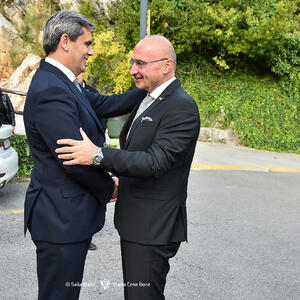
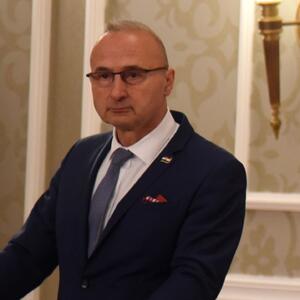
The plaque in Morinj was unveiled in early October 2022 by the then Ministers of Foreign Affairs and Defense. Ranko Krivokapic i Rasko Konjević (both from the Social Democratic Party) with the Croatian Foreign Minister Gordan Grlić Radman i Tom Medved, Minister of Croatian Veterans, in memory of the fact that in the early 1990s, the so-called Collection Center for prisoners of war from the Dubrovnik battlefield operated in Morinje for several months.
The plaque was placed outside the procedure stipulated by the Law on Memorials, i.e. without a decision from the Government and the consent of the Municipality of Kotor. Therefore, in mid-October 2022, the former Inspection Administration issued a decision to remove the plaque and obliged the Municipality of Kotor to implement it. However, the removal was repeatedly prevented by members of the Armed Forces of Montenegro.
Greater Serbian aggression
The plaque reads: "During the Greater Serbian aggression against Croatia, there was a camp here, the so-called Morinj Center (3. 10. 1991 - 18. 8. 1992) for detained Croatian civilians and defenders. We remember the crimes committed to disgrace the name and spirit of Montenegro. We express our regret for all the suffering experienced by the detainees. May it never happen again!"
The signature on the plaque is the Ministries of Foreign Affairs and Defense of Montenegro and the date 10. 10. 2022.
The Basic State Prosecutor's Office in Kotor dismissed the criminal charges against Krivokapić and Konjević for erecting the plaque in August 2023. The charges against them were filed with the Special Prosecutor's Office by the then Directorate for Inspection Affairs on suspicion that they had committed a criminal offense related to the violation and unauthorized erection of a memorial.
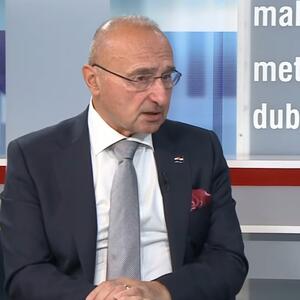
Grlić Radman told "Vijesti" in March of the same year that for Zagreb, the plaque in Morinje is "a statement of the consciousness of the people of Montenegro" and the starting point of new relations after the change of government in Montenegro in 2020.
"... And it, just as it is, represents a place of reverence and remembrance for us. Any interference with it would be the destruction of the relations built between our countries," said Grlić Radman at the time.
Representatives of the Association of Veterans of the Nineties Wars and the organization St. Michael's Choir protested in October last year, calling on the Minister of Defense Dragan Krapović to implement the decision of the Ministry of Culture and remove the memorial plaque in Morinje.
The protest in Morinj was also attended by the leader of the Democratic People's Party. Milan Knezevic, and those gathered said that they had come to "defend the laws and dignity of the people and the state."
In the town of Morinj, in Kotor, from October 3, 1991 to August 18, 1992, the Yugoslav People's Army (JNA) organized the so-called Center for the Reception of Prisoners from Croatia, known as the "Morinj Camp", where about 300 people from the Dubrovnik region were detained in inhumane conditions. The Ministries of Foreign Affairs of Montenegro and Croatia were coordinating the lists of detainees because their documentation on this did not match. 169 prisoners testified about the inhumane treatment of them.
For this war crime, four people were sentenced to 12 years in prison in court. The Special Prosecutor's Office announced in early February last year that, on the orders of Chief Special Prosecutor Vladimir Novović, criminal cases were reopened regarding, among other things, war crimes in Morinje.
Croatia: That the plaque remains and is not hidden
In a non-paper on eight remaining bilateral issues with Podgorica, which Croatia shared with other EU members in October, Zagreb “insists that the memorial plaque erected in the former Morinj camp, in memory of Croatian civilians and prisoners of war who were detained and subjected to abuse there, be preserved and remain permanently visible.”
"The memorial plaque, the text of which was proposed by Montenegro, was jointly unveiled by Croatian and Montenegrin ministers on October 10, 2022, following a joint initiative launched in 2021. This represented a significant step towards reconciliation, as did the unveiling of a memorial plaque on the island of Vis, which Croatian and Montenegrin ministers jointly dedicated to Admiral Vladimir Barović, who took his own life rather than participate in the shelling of Croatian cities. Shortly thereafter, two Montenegrin ministers who participated in the initiative to erect the memorial plaque in Morinj were dismissed, prompting the third minister to resign in protest," the document, which "Vijesti" has access to, states.
“Despite these joint efforts towards reconciliation, nationalist groups have demanded the removal of the memorial plaque in Morinje. In the meantime, a larger metal frame has been erected around it, apparently intended to accommodate a removable panel that could cover the plaque, except during official commemorations. Covering it would undermine this joint act of remembrance and reconciliation, as well as the recognition of Montenegro’s historical responsibility for the crimes committed in Morinje.”
See more:
Download the app and follow the news


FOLLOW US ON

