



The German government is pressuring Croatia to resolve bilateral disputes with Montenegro as soon as possible, which could otherwise jeopardize Podgorica's accession process to the European Union (EU), the Juronjuz portal reports today.
Berlin has joined the issue, urging Croatia to take a constructive approach to resolving bilateral disputes that threaten to jeopardize the accession of Montenegro, the country most advanced in the EU accession process, four officials directly familiar with the matter told Euronews.
Zagreb submitted a list of eight points it considers contentious earlier this week, which it requires to be resolved before Podgorica can complete the EU accession process. At the same time, Berlin is working behind the scenes to ensure that the EU enlargement process does not lose momentum.

Berlin has also recently offered to mediate, but that offer has not yet been acted upon. The government of German Chancellor Friedrich Merz is trying to position itself as an impartial mediator, fearing that unresolved bilateral issues could jeopardize the EU enlargement process.
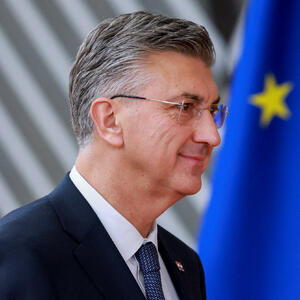
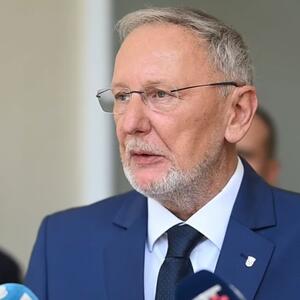
"There are issues that we have been pointing out to our Montenegrin neighbors for years," Croatian Prime Minister Andrej Plenković told reporters on Thursday, ahead of the European Council summit in Brussels.
"Absolutely no progress has been made in the last two years," said Plenković, claiming that his country had been "extremely constructive" in accession negotiations with Montenegro.
DON'T MISS IT
The European Commission (EC) has been involved in talks between the two countries in recent weeks, while several member states have worked to prevent a stalemate in the enlargement process due to bilateral issues, Euronews writes.
France in particular wants to avoid complications in the enlargement process due to domestic political reasons, while Luxembourg criticized the use of the accession process to resolve bilateral disputes.
All three European governments are actively talking to Croatia, putting pressure on Zagreb to resolve bilateral issues. However, the strongest pressure comes from Germany, which is trying to ensure the continuation of the enlargement process.
The disputes stem largely from the legacy of the wars in the former Yugoslavia in the early 1990s, including property claims and disputed border issues. They threaten to undermine Montenegro's ambition to become the 28th member of the EU by 2028, Euronews reports.
Croatia's stance has also drawn public criticism, including from EU High Representative for Foreign Policy Kaja Kalas, who said on the sidelines of the European Council that bilateral issues should not be misused to block the accession process.
Zagreb has been accused of raising the controversial issues at the last minute in order to exert maximum pressure on Montenegro. Croatia, on the other hand, claims that these are long-standing problems and that it has only put forward a few symbolic demands.
Zagreb emphasizes that war crimes investigations and compensation for victims are among the obligations Podgorica must fulfill in order to close the accession chapters.
However, EU officials fear that the mood towards enlargement could quickly change if Montenegro's accession is not completed soon.
A series of elections are scheduled for next year in key member states, including France, where far-right leader Marine Le Pen, who is traditionally skeptical of EU enlargement, is considered the favorite in the presidential election.
Germany advocates for new models of EU enlargement, including a special "associated candidate" status for Ukraine, the concept of "gradual integration" of candidate countries, and stronger democratic safeguards for new members.
Montenegro would also be the first country to join the EU according to the current enlargement methodology.
The Berlin Process, an intergovernmental initiative launched in 2014 to encourage regional cooperation among the Western Balkan countries, is chaired this year by Podgorica, which has been working closely with the German government within the forum in recent months, Euronews reports.
EU officials interpret Germany's move regarding bilateral disputes as a sign that Berlin is taking responsibility for the enlargement process.
Montenegro's accession is also taking place in a broader geopolitical context, in which Brussels is increasingly using enlargement to tie its immediate neighbors more tightly to the West, amid growing tensions with Russia.
Since Podgorica is first in line for membership, a stalemate caused by bilateral issues that some consider irrelevant could have devastating consequences for other countries leading the accession process, primarily Albania, Moldova and, especially, Ukraine, whose path to membership will likely be closely linked to eventual peace negotiations with Moscow.
In other words, Germany believes that it is time to move forward with Montenegro's accession, given the efforts Podgorica has made, as well as the geopolitical circumstances that require the enlargement process to maintain momentum.
DON'T MISS IT



See more:
Download the app and follow the news


FOLLOW US ON

