




In the next three years, the University of Montenegro should receive an improved electronic index, new and renovated facilities, more modern study programs, but also stronger support for the best students and young researchers, while some administrative procedures would be simplified and digitalized.
This is stated in the Work Program for the period from 2027 to 2030, which was presented yesterday by the candidate for rector. Irena Orovic before the members of the Senate.
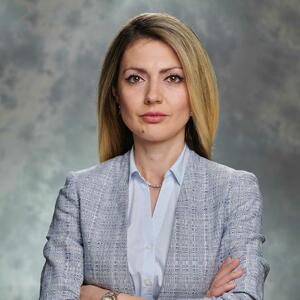
Yesterday, Orović received the support of 32 out of 35 members of the Senate, so that body will propose to the UCG Board of Directors to elect her as rector for the upcoming three-year term.
Irena Orović is a full professor at the Faculty of Electrical Engineering and the current Vice-Rector of the University of Montenegro.
She graduated from ETF in 2005, received her master's degree in 2006, and her doctorate in 2010. During her academic career, she held several managerial and professional positions at the University and in bodies responsible for scientific research. She is the author of a three-digit number of scientific papers, several textbooks, books, and monographs, has trained at universities and institutes in France, Germany, and the USA, and is the recipient of numerous domestic and international awards for scientific and academic work.
Orović emphasizes in the program that he sees the University not only as an educational and research institution, but also as an institution that should have a stronger impact on the social, economic and cultural development of Montenegro. Therefore, he promises greater accessibility of university spaces and knowledge to citizens, cooperation with schools, local communities, businesses and institutions, but also strengthening the principle of the "open university".
New programs, mentoring, awards...
According to the work program, Orović announces the review of existing and development of new study programs, with stronger involvement of students, the alumni community, and employers in their creation.
"Study programs should be reviewed beyond the reaccreditation period, with the participation of the academic community, students, alumni, and employers," the program states.
It also announces the development of interdisciplinary programs, programs in English, as well as micro-credentials - shorter educational units through which students and employees could acquire additional, specific knowledge and competences.
Orović also believes that teaching must be based less on passive listening to lectures and more on active student work.
The program states that practical teaching, project work, discussions and solving specific tasks should be developed, with more intensive use of digital technologies. Orović emphasizes in the document the importance of direct teaching and contact between professors and students, emphasizing that more systematic monitoring of the success of higher education students at state institutions is also necessary, in order to identify earlier those who need additional support, mentoring or a different organization of teaching.
Orović also suggests formal evaluation of extracurricular activities, so that student engagement in sports, culture, volunteering, entrepreneurship, research projects, and other activities is recorded and recognized.
A changed reward model is also being announced for the best students.
"That is why we will proceed with amendments to the Regulations on Student Awards," the program states, with the idea that the awards should not be symbolic, but rather represent more significant support for the most academically successful.
One of the projects is called “Scholarships for the Best - Jobs with the Best.” The idea is for the University to connect the best students with companies, institutions, and other partners that would provide them with scholarships, internships, and potential employment.
From user to partner
Orović proposes strengthening the Center for Science, Technology and Innovation, developing centers of excellence, greater participation of the University in international projects, and creating better conditions for young researchers.
Among the areas that should be given special impetus, he lists artificial intelligence (AI), information technology and information security. The program also foresees measures for the return of researchers who have studied or worked abroad. According to the program, the University of Montenegro should offer them specific forms of cooperation - from guest engagements and joint mentoring to participation in projects, and where possible, return and employment.
"The university moves from the role of a user to the role of a partner in international programs," is one of the goals of the chapter related to international cooperation and European integration.
Orović announced stronger expert support for the preparation of international projects, a greater number of applications for European programs and funds, as well as the development of joint study programs with foreign universities.
The program also envisages greater mobility of students and employees, along with simplification of administrative procedures and better recognition of results achieved during stays at other universities.
Investments and digitalization
Professor Orović sees digitalization as one of the key prerequisites for the modernization of the University and points out that existing information systems are not sufficiently connected and that students and employees still go through procedures that could be simpler.
"Digitalization only makes sense if it saves time for the student, teacher or service, reduces the number of steps and makes the process more reliable," the program states.
Among the concrete measures is the introduction of an electronic index as a single digital student service. According to the program, students should have access to academic data, register for exams, see results, and use other services that currently require multiple procedures in one place.
It is also planned to connect existing information systems, introduce electronic signatures, digitize records, and develop services for employees.
When it comes to investments, Orović states that numerous projects have been launched or implemented in previous years.
Plans for the upcoming term include continued reconstruction of faculty buildings, energy renovation of facilities, development of the central university library, new student and accommodation facilities, as well as further development of the university campus.
Orović's program also included improving energy efficiency through the renovation of facades and roofs, heating and cooling systems, solar power plants, and other measures that would reduce energy consumption and costs.
It also announces new university facilities, but the program for all projects does not specify completion deadlines or the total value of investments, which would be one of the key issues during the presentation of the program.
The Senate's proposal to elect Orović as rector will be submitted to the Board of Directors, which will make the final decision on the election in accordance with the procedure. The term of office of the current rector Vladimir Božović expires in the summer of next year.
See more:
Download the app and follow the news


FOLLOW US ON

