



Maltese businessman Jorgen Fenech was acquitted on Wednesday of charges of involvement in the death of journalist Daphne Caruana Galizia, but the trial revealed the challenges facing those leading the search for her killers, the British newspaper The Guardian reported today.
The end of the longest murder trial in Malta's history has left the country in turmoil, as a grieving family continues to search for answers, writes The Guardian in an article on its portal.
On Wednesday at 19.30pm, gasps and shouts echoed through Courtroom 22 of the Palace of Justice in Valletta, when a jury found not guilty a businessman accused of ordering the murder of investigative journalist Daphne Caruana Galizia.
DON'T MISS IT
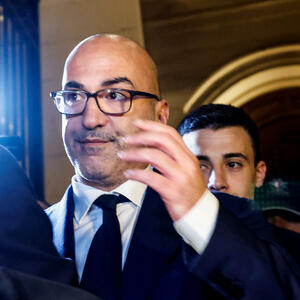
Jorgen Fenek, 44, faced life in prison if convicted. Now, after almost seven years spent alternating between detention and freedom, he is free to return to a life of luxury as the heir to one of Malta's greatest fortunes.
Caruana Galizia's writings criticized a number of powerful figures, including Fenech and politicians he was close to. Her revelations, as well as the aftermath of her violent death in a car bomb explosion in October 2017, ultimately led to the resignation of Prime Minister Joseph Muscat and several members of his government.

Within weeks, three hitmen accused of planting the bomb were arrested. Two were sentenced to life in prison after pleading guilty to murder, while the third received a reduced sentence of 15 years in prison in exchange for testifying against his accomplices.
After the decision made on Wednesday, the long search for whoever was responsible for their hiring will have to begin anew.
Opposition leader Alex Borg called for parliament to be recalled from its summer recess and called on the government to take measures to strengthen the protection of journalists and the fight against corruption.
"We believe journalism is the backbone of democracy," he told the Guardian, describing the failure to find the culprits as a stain on the Labour government, which has been in power since 2013.
Caruana Galizia's family described the verdict as a "denial of justice".
The state prosecutor is considering whether to appeal and request a new trial. The chances of success may be slim: both charges against Fenech were dismissed by a majority of eight to one.
It took nine years, a relentless campaign by the family and a determined judge to bring Fenech before a jury. In the end, they believed him. During his testimony, he was categorical: "I never ordered the murder of Daphne Caruana Galizia, or anyone else. I had no role in her murder."
While the identity of the mastermind remains a mystery, the trial has revealed the full extent of the challenges faced by those leading the search for Daphne's killers.
Witness after witness spoke of attempts to block and sabotage the murder investigation. As detectives tried to identify everyone involved - from the bomb-makers to the hitmen to the ultimate mastermind - they heard evidence that the most sensitive details of the investigation were being leaked to the public. Most disturbing of all, the jury was told that much of that information came from the prime minister's closest aide.
"Don't worry about me, no one can do anything to me," Fenech was heard saying in secret recordings that formed one of the key parts of the case against him and were played to the jury.
The man who made the recordings was taxi driver Melvin Teuma, who testified that he acted as an intermediary between Fenech and the bomber. He was a key witness for the prosecution, having been pardoned in exchange for his testimony two years after the murder.
In July 2020, he was transferred to the hospital in critical condition. Wracked by remorse, he attempted suicide while staying in a safe house, and required intensive support to return to the courtroom and testify again.
What follows is the story of the search for those responsible, based on pre-trial hearings, the trial itself, and related court proceedings.
Obsessed with an investigation that will cost her her life
During the last summer of her life, Caruana Galizia was deeply isolated.
As a younger woman, she was not only brilliant but also strikingly beautiful, with large, striking earrings and lustrous black hair. She co-founded a national newspaper, published a lifestyle magazine and became one of Malta's most widely read columnists, all while raising three sons.
In later years, research work completely occupied her.
Her blog "Running Commentary" was among the most widely read news sites in Malta, but its popularity, as well as her often scathing satires on public figures, made her a target.
She had almost as many opponents as supporters, and was vilified on social media as a “witch.” There were also arson attacks, and the family dogs were killed.
"I was worried about her. The atmosphere around her was terrible. People would stare at her in Valletta. She wouldn't leave the house," Andrew, one of her sons, told the trial.
Caruana Galizia knew she was at risk and had already begun to change her daily routine. For added security, she drove a rented car.
It was in that car that she died on October 16, 2017, at the age of 53, just a few meters from her home. A bomb placed under the driver's seat blew up the vehicle, scattering burning debris across the road and a nearby field.
Barricaded in their home, sheltering from the media storm, Daphne’s sons and her widower Peter wondered who they could trust. They were convinced that her work contained clues, but they also felt that they could not hand over sensitive material about sources to the police. Her eldest son Matthew, a software engineer who was part of the Pulitzer Prize-winning reporting team for the Panama Papers, a massive leak of information about offshore companies, suggested that they contact journalists outside Malta.
"I didn't have the resources to conduct the investigation myself," Matthew told the jury at Fenech's trial.
He reached out to The Guardian, which has teamed up with Reuters, the nonprofit organization Forbidden Stories, and others to form the Daphne Project.
Before her death, Caruana Galizia published a series of stories that plunged the Maltese government into scandal. In the Panama Papers, she found evidence that Energy Minister Conrad Mizzi and the prime minister’s chief of staff, a businessman turned political operative named Keith Schembri, had set up offshore companies that were owned through anonymous trusts. The statements she wrote, which were read out during the trial, indicated that she believed they planned to use them to receive bribes.
Those charges are now the subject of criminal proceedings in which Fenek, Schembri, Mici and others are pleading not guilty to corruption, trading in influence and criminal association.
At the time of her murder, Caruana Galizia was receiving leaked information about a major government contract - a concession to build a 500 million euro gas-fired power plant to supply electricity to the national grid. The information had been leaked from the server of the company building the plant, Elektrogas. One of its shareholders was Fenek, and email correspondence suggested that he was the driving force behind the project, responsible for communicating with the government and refinancing a key bank loan.
The jury heard that Caruana Galizia described the project on her blog as a "miraculous new powerhouse of corruption".
The prosecution argued in its closing arguments that Fenek's motive for ordering her murder was to prevent further revelations.
The Elektrogas data was shared with the Daphne Project. While journalists pored over the documents, tracing the money flows, homicide detective Keith Arnault was searching for the killers. He made rapid progress at first, thanks to the help of the US Federal Bureau of Investigation (FBI). The agency's mobile phone analysis team was in Europe when the bomb exploded, and was diverted to Malta, where they arrived just hours later.
The hitmen, brothers George and Alfred DeGiorgio and their accomplice Vincent Muscat, used disposable phones, but they were careless, often carrying them along with their regular cell phones. The FBI linked the devices and traced the text message George sent to trigger the bomb. In December 2017, all three were arrested.
In April 2018, Vincent Muscat told police he was willing to testify against his accomplices in exchange for a lighter sentence. Although the hitmen never knew the identity of the ultimate client, Muscat knew the name of the middleman: Melvin Teuma.
The mosquito and the lion
For Teuma, a teenager who grew up without a father, the Malta Racing Club was like a second home. He started out as a groom, tending to the ponies that pulled a small cart around the bare dirt track. He soon began working as a scout for a bookmaker. The old bookmaker's office still stands today, across the street from the Fenek family stables.
Teuma and Fenech became friends, but it was not a relationship of equals. As the taxi driver said in court: "I was hanging out with a lion, and I am a mosquito."
Police told the court that they had identified Fenech as a suspect by September 2018. However, it was not until February 2019 that a warrant was granted to wiretap his calls.
The person signing the warrants was Prime Minister Joseph Muscat. From the very beginning, Muscat received information about the progress of the investigation directly from Arnaud and his colleagues. This decision was controversial because, along with his ministers, he was one of the main subjects of Caruana Galizia's reporting.
Muscat said it was customary for the prime minister to sign orders in cases of national importance. He had previously said he had carried out his duties "without fear, prejudice or favouritism". In a statement on Thursday, he said that from the very beginning, and while he was still in office, "no one was protected from justice or exempted from it".
Schembri was allowed to attend police briefings, and at trial he said he was kept informed of the progress of the investigation at all times.
The two were close — Schembri started out as Muscat’s campaign manager — but Schembri had another good friend: Fenech. They played football together as children, and when Fenech, a few years younger, took over the family business, Schembri was his mentor. They often went on vacations together and gathered for family events.
Schembri is accused of repeatedly leaking sensitive details of the murder investigation to Fenech. He denies the charges and is being tried in a separate criminal case.
During the trial, Fenek tried to portray Schembri as the real mastermind, describing himself as the intermediary who relayed messages to Teuma. Fenek's lawyers portrayed the taxi driver as a blackmailer and a liar and accused the police of framing Fenek by failing to adequately investigate other leads. They also claimed that the searches of Schembri's home and office were poorly conducted. His phone, which was active for 28 minutes before the raid, was never found.
"All roads lead to Quito, and all the bridges leading to Quito were burned. And that's why a bridge had to be built to Jorgen Fenech," Fenech's lawyer said.
Schembri denies any involvement in the murder. Police have stated in their testimony that he was never a suspect in the murder.
During questioning, Fenek admitted that he had paid 400.000 euros to hitmen through Teuma to cover their defense costs. He said he did this to keep Teuma quiet and that the taxi driver had "extorted" the money from him. He also admitted that he had given Teuma money before the murder, but claimed that he had warned him that it should not happen, telling the taxi driver to "stop here."
He also admitted that he had been passing on to Teumi information about the police investigation that he had received from Schembri, starting shortly after the assassination.
"Keith Schembri was constantly informed and, one could say, practically in real time. The information was conveyed to me by Keith Schembri, but it came from Mr. Arnaud, and he told me that he received it from Mr. Arnaud," Fenech told the court in 2019, in a constitutional proceeding concerning his right to a fair trial.
The recordings, messages, and Fenek's own testimony indicate that in the first months after the murder, he passed on to Teumi the identity of the person who had made the bomb, as well as the date when the police planned to arrest the hitmen. When the police raided their shed by the docks, they had already thrown their mobile phones into the water, and one of them had written his wife's phone number on his wrist.
In April 2018, Fenek also relayed information that Vincent Muscat was offering to become a prosecution witness. This news completely upset Teuma, so he began recording his conversations with Fenek, using a spare phone set to airplane mode so that it would not ring.
Around this time, Arno's investigation seemed to be losing momentum. Eventually, details of what had been uncovered began to leak out. By May 2019, journalists already knew Teuma's name.
Europol, which had been supporting Arnaud and his team, threatened in the summer of 2019 to withdraw if no arrests were made. And the family was losing patience.
"We knew for months what was being claimed about Melvin Teuma. It got to the point where I just wanted to go out into the street and spray paint his name on a wall. I wanted the world to know that he was the middleman, just to make the police do something," said Matthew Caruana Galizia.
Although on the outside the walls around the prime minister and his friends appeared solid, when the police finally moved in on Teuma, Joseph Muscat's administration collapsed.
Teuma was warned of the planned date of his arrest, but the police took action two days earlier, on November 14, 2019. Fenek had previously encouraged him in messages to remove evidence. The jury saw one message in which he wrote: "Be 100 percent sure that everything is clean."
However, Teuma kept his recordings. On November 19, the Prime Minister signed a memorandum granting Teuma immunity from prosecution in exchange for his testimony. The messages seen by the jury indicate that Fenech began preparing to escape just hours later.
"Go while you still have time," his uncle wrote in a message. He had planned to sail to Sicily and then head to France. But the police were tipped off. His yacht was intercepted about a mile offshore and he was arrested. Recordings of his interrogation, played during the trial, showed that he offered to implicate Schembri in the case in exchange for a pardon.
As Fenech spoke, resignations poured in. Schembri was arrested on suspicion of leaking information from the investigation and resigned. The economy minister, a frequent subject of Caruana Galizia's blog, temporarily stepped down, while Micci, who had since moved from energy minister to tourism minister, resigned, citing "political, extraordinary and general circumstances in the country".
Public anger brought hundreds of people onto the streets, filling the large square in front of the prime minister's office, with shouts of "Mafia, mafia."
Fenech's request for clemency was rejected and he was indicted on November 30. Two days later, Joseph Muscat resigned. Defiant to the end, he insisted: "This case cannot define everything that our country is."
The affair is once again attracting attention outside Malta. Shami Chakrabarti, a Labour member of the British House of Lords, has been appointed rapporteur for a Council of Europe inquiry into the Maltese government's response to the murder. Caruana Galizia's family members are due to give evidence at the first hearing next week.
"Failure to ensure individual accountability for murder risks perpetuating a culture of impunity. A culture in which ... those who try to bring light into the darkness pay the ultimate price," Chakrabarti said on Thursday.
See more:
Download the app and follow the news


FOLLOW US ON

