



European intelligence agencies are trying to determine whether former German intelligence chief August Hanning compromised classified information and what risks that might have posed, intelligence officials said after his arrest this week.
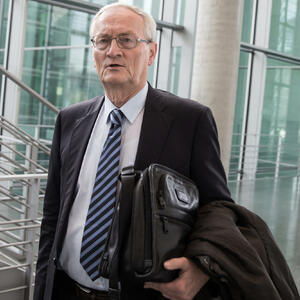
The arrest of Hanning, the former director of Germany's Federal Intelligence Service (BND), on suspicion of espionage and high treason, has caused a stir in security and intelligence circles. His former chief of staff at the agency has also been arrested.
German media reports say Russia appears not to have been involved in the case. However, allegations that hundreds of classified documents were leaked without authorization and that intelligence may have been passed on to foreign officials have damaged the BND's international credibility at a time of growing security concerns, Reuters reports.
Just a few days earlier, the current director of the BND warned that Germany faced a real risk of armed conflict with Russia, accusing Moscow of waging a “shadow war” with hybrid and drone attacks.
"This is a complete disaster," a German security official told Reuters, saying the potential consequences for the BND's relations with partner intelligence services could be "very, very serious."
Hanning, who left the BND in 2005 and founded a private consulting firm after leaving government service, is suspected of agreeing to pay an employee identified as Manfred D. to provide him with confidential documents.

Manfred D., who was chief of staff to successive BND directors, including Hanning, and retired in March 2026, is accused of providing him with almost 2.000 documents, at least some of which were marked confidential.
Hanning is suspected of using information from those documents to inform foreign intelligence officials. It is not yet clear what information was passed on and to whom.
Azerbaijan has denied reports of contacts between Hanning and Azerbaijani officials. The prosecutor's office declined to comment on the case.
Risk assessment
German media reports that many of the disputed documents were briefing materials prepared for the chancellor's office or other senior officials, rather than original intelligence.
A European intelligence official told Reuters that some European services are now assessing whether data they previously shared with Germany has been compromised.
Another official from one of the allied intelligence services said they were checking for possible damage and expected all other partner services to do the same.
A third Western official said that documents stolen from the BND included intelligence from the US Central Intelligence Agency (CIA). The CIA has not commented on the case.
The allegations relate to a period when Hanning was no longer working for the German government, but an Interior Ministry spokesman said authorities were investigating "possible violations of regulations on the protection of confidential information" during his time in the civil service.
It is problematic that former civil servants, who possess detailed knowledge of security and intelligence issues, can be employed in the private sector without prior security clearance.
Following the victory of the far-right Alternative for Germany (AfD) in state elections in eastern Germany last month, German intelligence officials expressed concern about the risk that pro-Russian officials with access to classified information would leak that information to Moscow.
However, the Haning case caused a particularly big stir because both he and Manfred D. were long-time members of the very top of the German security apparatus.
Reuters writes that this is a sensitive period for intelligence services, as Germany strengthens its defense forces to counter the threat it sees from Russia. Chancellor Friedrich Merz's government approved plans this year to strengthen the intelligence services, which were founded after World War II with significantly more limited powers than many of their counterparts.
Hanning did not immediately respond to requests for comment. Swiss security consulting firm Pluteos, where Hanning was chairman of the board, and neither of his lawyers immediately responded to requests for comment.
The German weekly Der Spiegel quoted one of Hanning's lawyers, who confirmed that his client possessed confidential documents, but denied that he had jeopardized national security by passing on or selling the information to third parties.
"My client has been unfoundedly prosecuted," Der Spiegel quoted the lawyer as saying.
Business engagements of former officials under scrutiny
The case has once again drawn attention to the business dealings of former state officials, even in cases where there is no suspicion of wrongdoing. Just days earlier, former German Chancellor Gerhard Schröder, who has come under fire for his ties to Russian companies and President Vladimir Putin, became a member of the supervisory board of the Russian retail chain Hiperglobus.

The parliamentary committee for oversight of intelligence services has assessed that it is "problematic" that former civil servants, who possess detailed knowledge of security and intelligence issues, can be employed in the private sector without prior security clearance.
Konstantin von Noz, a member of the parliamentary committee for oversight of intelligence services, said the Hanning case clearly showed that there were “structural problems” that the government should address.
“Trust in the integrity of the work of German intelligence services must not be betrayed, especially given the clear expectations of our partner intelligence services,” he said. “That would be disastrous in the current security situation.”
Senior intelligence officials in many countries often engage in security consulting after leaving government service, but German officials believe the Hanning case points to the need for tighter controls.
Andi Grote, interior minister of the German state of Hamburg, said the case raises the question of "what types of employment and business activities should actually be allowed for senior security officials during and after their service."
See more:
Download the app and follow the news


FOLLOW US ON

