



The El Niño weather phenomenon will continue to strengthen throughout 2027 and could become the most intense ever recorded, increasing the risk of extreme weather conditions throughout next year, the World Meteorological Organization (WMO) said today, Reuters news agency reports.
The United Nations meteorological agency said its forecasts showed a near 100 percent chance that El Niño would last until February 2027, fueled by unusually warm Pacific Ocean temperatures. The WMO said it was the first time it had expressed such a level of certainty.
"If this trend continues, it could be stronger than anything we've seen since monitoring began. So literally beyond all previous scales," WMO Secretary-General Celeste Saulo said at a press conference in Geneva.
El Niño is a periodic warming of sea surface temperatures in the eastern Pacific Ocean, caused by a weakening of the trade winds. It occurs every two to seven years and usually lasts up to 12 months, causing heavy rains and droughts across Latin America.
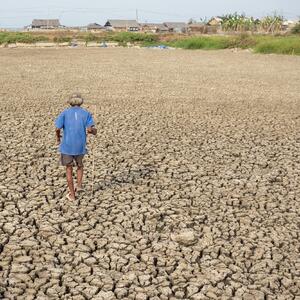
A very strong El Niño can significantly change precipitation and temperature patterns around the world and trigger extreme weather events, such as droughts and typhoons.
Ocean warming
Although it is a natural phenomenon that is not directly related to climate change caused by the burning of fossil fuels, it can be further amplified by higher ocean temperatures, which are linked to climate change.
"El Niño is magnified before our eyes to enormous proportions. Science leaves no room for doubt: the planet is in uncharted waters, and those waters are warming," said United Nations Secretary-General Antonio Guterres.
Temperatures in parts of the Pacific Ocean during this year's El Niño - one of only four to be classified in the highest category of "very strong" since records began in 1950 - are already more than two degrees Celsius above normal, the WMO said.
This phenomenon has already affected agricultural products from tropical areas, causing a serious food crisis throughout the so-called Dry Corridor of Central America.
"Jump" in global temperatures
El Niño is expected to peak towards the end of this year, the WMO said in a statement. However, its effects will continue into 2027 and could result in higher global temperatures next year, WMO officials said.
"Usually after El Niño we see a spike in global temperatures - of a temporary nature," Wilfran Mufuma Okija, head of the WMO's climate forecasting service, told reporters, referring to 2024, which was the warmest year on record so far.
"There is a possibility that 2027 will be the warmest year in recorded history," he said.
The WMO said it was stepping up preparations and early warning systems to enable countries to respond in a timely manner, for example by switching to more drought-resistant crops in certain areas.
"WMO is committed to working closely with partners across the United Nations system and the humanitarian sector to provide climate data and analysis needed for disaster management and climate-vulnerable sectors, such as agriculture, health, energy and water resources management," said Saulo.
DON'T MISS IT




See more:
Download the app and follow the news


FOLLOW US ON

