



If US Defense Secretary Pete Hegseth goes ahead with a plan to live-stream the execution of a soldier radicalized by extremist Islam who killed 13 people at a Texas military base, the United States will join a motley group of lesser states and rogue actors that have carried out public executions in recent years.
Only two countries currently systematically carry out public executions - Iran and Afghanistan. According to Amnesty International, the Taliban authorities carried out six such executions in 2025, while the regime in Tehran carried out 11.
In April last year, the Taliban executed four men accused of murder in three different cities. All were shot in front of large crowds in public sports stadiums.
Such incidents were common when the radical Islamist movement was in power in the late 1990s. Then, as now, the Taliban claimed that the executions were preceded by proper legal proceedings.
In July, Iranian authorities hanged two young men accused of killing police officers in the central square of Isfahan, Iran.
Human rights organizations have recorded about 30 public executions in the country over the past five years, with their intensification in recent months, following massive civil unrest earlier this year and the war with the US and Israel.
Historically, many hangings in Iran were carried out using a crane that served as a makeshift gallows.
Saudi Arabia appears to have ended the practice of public executions after decades of beheading convicted criminals in a square in the capital, Riyadh, and occasionally publicly in other cities.
Legal experts and historians believe that public executions have different purposes.
In countries where the rule of law is weak or there is doubt about the effectiveness of the criminal justice system, public executions allow authorities seeking to gain support to reassure citizens that perpetrators of crimes will be punished.
Such public spectacles can also serve as a means of intimidating the population.
Armed militant groups often resorted to public executions, often seeking to consolidate their authority in this way.
The Islamic State, which controlled large parts of Iraq and Syria between 2014 and 2019, carried out thousands of executions for alleged offenses ranging from homosexuality to theft.
Many executions were carried out publicly or were filmed.
Many of them were carefully staged to create a spectacle intended for broadcast, with the aim of intimidating enemies and potential opponents, but also of radicalizing existing Islamic State supporters and attracting new ones.
In October 2025, as Hamas sought to re-establish control over the population of Gaza, the organization publicly executed six men who were apparently accused of collaborating with Israel.
In 2017, Hamas executed three men accused of the same crime, and the event was partially broadcast live on Facebook.
The execution of Major Nidal Hasan, a former military psychiatrist, at Fort Hood in Texas would be the first public execution in the US in decades.
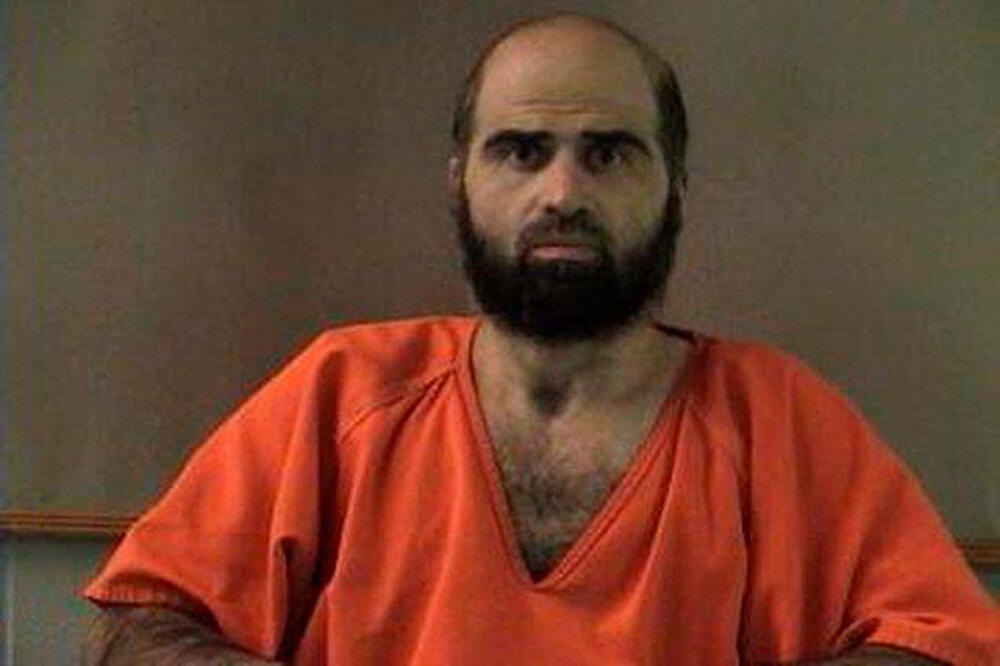
In the United States, the practice of public executions was largely discontinued during the 1930s.
However, in 2001, some survivors and family members of the victims were allowed to witness the execution by lethal injection of Timothy McVeigh, who was convicted of the 1995 bombing of the federal government building in Oklahoma City.
Hasan's execution is scheduled for December 3rd.
Hegseth, who has the authority to decide on the manner of execution, said the execution would "of course" take place at the same time and place as Hasan's attack 17 years ago, and that a firearm would be used, just like Hasan used it.
Hassan can appeal through the civilian federal court system, which could delay the execution for years.
According to Amnesty International, 2.707 executions were carried out worldwide in 2025, the highest number recorded since 1981 and an increase of two-thirds compared to the previous year.
The sharp increase is largely due to more than 2.100 executions in Iran, the highest number of executions in the country in decades.
Amnesty International assessed that the authorities have placed the death penalty "at the center of flawed narratives about public safety and a tough fight against crime" in order to consolidate control, demonstrate state power, and score political points.
“This trend was most pronounced in countries where authorities consolidated their power by restricting the space for civic action, silencing dissent, and showing disrespect for the protection mechanisms established by international law and human rights standards,” the organization said in its report.
Translation: NB
See more:
Download the app and follow the news


FOLLOW US ON

