



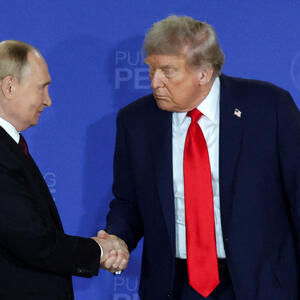
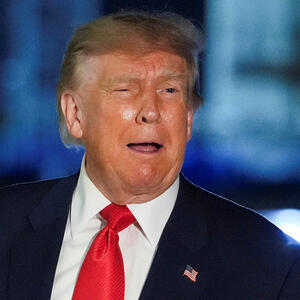
US President Donald Trump has waived key US sanctions and tariffs on Russia, just days before they were due to take effect under a law he signed last month, Reuters news agency reported.
Among these measures were tariffs on goods from Russia, as well as punitive measures for the purchase of Russian oil and gas.
In an executive order issued by the White House on Friday, Trump said such an exemption was in the national interest of the United States.
The aim of the law was to increase pressure on Russia for its invasion of Ukraine, which began in 2022. Trump, however, has recently shown increasing favoritism towards Moscow, while at the same time publicly criticizing Ukrainian President Volodymyr Zelensky, including statements suggesting that Kiev needs a new leader, according to Reuters.
With weeks to go before the US midterm elections, in which Trump's Republicans are struggling to hold onto narrow majorities in both houses of Congress, the new measures could further push up oil prices, analysts said. Americans are already facing rising costs, largely attributed to the US-Israeli war against Iran.
The law, whose main proponent in Congress was the late Republican Senator from South Carolina Lindsey Graham, provided for the introduction of tariffs of up to 100 percent, within 30 days, on all goods imported into the United States from five countries that are the largest importers of Russian crude oil or gas.
The tariffs would also apply to any country that knowingly purchases Russian oil or gas 30 days after the law takes effect, as well as to the five countries that most help Russia circumvent sanctions.
The executive order states that the exemption will remain in effect until Trump or his top officials determine that "further steps are necessary."
Trump signed the Lindsey O. Graham Russia and Iran Sanctions Act of 2026 into law in mid-September.
"I have provided a certification to Congress that granting such an exemption at this time is in the national interest of the United States," Trump said in the order.
Countries such as China and India, which are among the largest buyers of Russian oil, have previously expressed concerns about the sanctions law on Russia.
Beijing said it "consistently opposes extraterritorial application of laws that have no basis in international law," while India warned Washington that the new tariffs could affect bilateral relations.
The law allows the president to waive the application of sanctions by simply notifying Congress that he has determined that they are not in the national interest.
Democratic Congressman Don Beyer from the US state of Virginia sharply criticized Trump for his decision to exempt from sanctions, accusing him of pandering to Russian President Vladimir Putin.
"Trump's latest capitulation to Putin represents yet another betrayal of our Ukrainian partners and defies the clear intent of Congress, which passed legislation to punish Russia for its illegal war of aggression," Beyer said in a statement.
Trump has previously faced criticism from several US senators, including some Republicans, over a recent deal with Russia on diesel fuel. Under the deal, Trump agreed to lift sanctions on Russian exports, while Russia pledged to supply diesel fuel to the world market in an effort to lower fuel prices.
DON'T MISS IT
Lawmakers who criticized the agreement said it would help fund Russian war operations.
The Russian president's special envoy for investment, Kirill Dmitriev, called Trump's decision "a truly historic moment."
Dmitriev wrote on the social network X that the law could practically lead to a complete break in economic cooperation between Russia and the US.
See more:
Download the app and follow the news


FOLLOW US ON

